 The heart of it
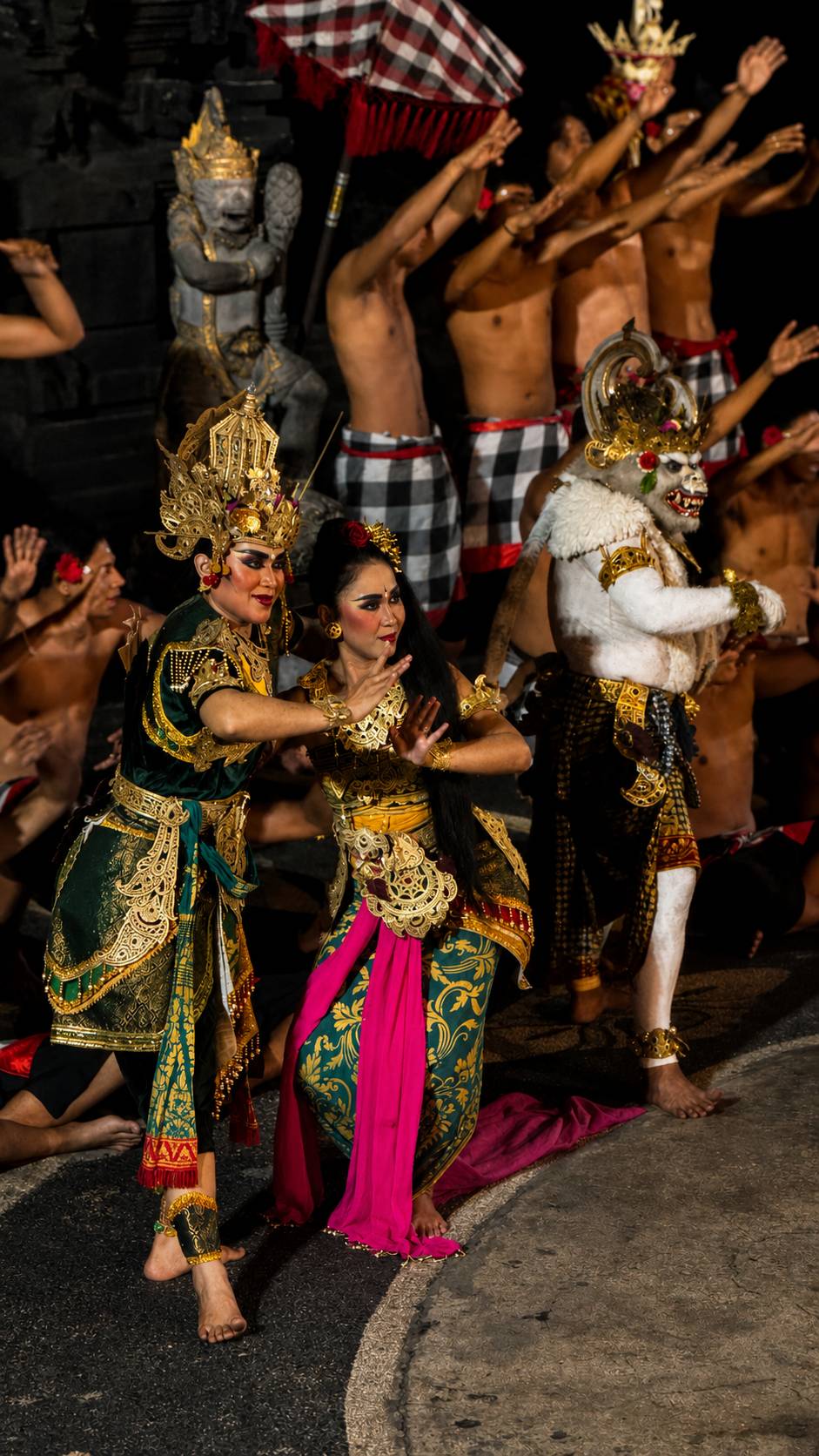
Rama and Shinta
The exiled couple
- Look for
- Gold crowns, slow steps
- Scene
- The forest
- Fate
- Reunited
Guides
Language
EnglishCurrency
US dollar · $Prices on GetYourGuide appear in your chosen currency.
Guide · Story and history
There are no spoken words and no programme notes in the circle. Know the kecak dance story before you sit down, and the chanting, the masks and the fire scene all fall into place.
Editorial team, kecakfiredanceshow.comUpdated October 26, 20266-minute read31 sources
The story in brief
The kecak dance story comes from the Ramayana, one of the great Hindu epics, and the stage version takes only one part of it. The Uluwatu temple management sums it up: Prince Rama and his wife Shinta are exiled to the forest, the demon king Rahwana abducts Shinta, and in the battle that follows the white monkey warrior Hanoman plays a crucial part in rescuing her.1
The Ministry of Tourism describes the same focus: kecak usually presents the part of the epic in which Sita is kidnapped by Ravana and Rama fights back with the help of Hanoman and his army of monkeys.6 Shinta and Sita are the same heroine, Rahwana and Ravana the same demon king; Bali uses its own spellings.
Nobody speaks a line. The characters tell the story through hand gestures, facial expressions and graceful steps, with no spoken dialogue, the Ministry notes.7 That is why it pays to know the outline before the first chant: once you can tell Rama from Rahwana and recognise the white monkey, every movement in the circle reads as part of a plot rather than a spectacle.
The plot in order
In the forest
The exiles wander into the woods.8
The abduction
He carries her off and holds her in his palace.8
The search
Sugriwa sends his commander to find Shinta.9
The fire
Hanoman escapes unharmed and burns the palace.10
The battle
The monkey troops come to Rama's aid.11
The story opens in the woods. Prince Rama wanders there with his wife Shinta and his brother Lakshmana, and the giant Rahwana kidnaps Shinta and holds her in his palace.8 Watch for the moment the demon king appears in his mask and crown: from then on the chorus changes its mood, and the circle becomes the forest, the palace and the battlefield in turn.
Rama seeks help, and the monkey king Sugriwa sends his commander, the white monkey Hanoman, to find Shinta in Rahwana's palace.9 Hanoman is captured and put inside a circle of fire to be burned alive; instead he breaks out unharmed and burns Rahwana's palace.10 This is the scene behind the name kecak fire dance, and it comes late.
The ending belongs to the alliance. Sugriwa and Hanoman come to Rama's aid with the rest of the monkey troops and defeat the evil king once and for all.11 The management describes the climax as Hanoman's fire dance and calls it the triumph of good over evil.2 Stay to the end; the last scenes resolve what the fire began.
Who is who
| Name in Bali | Also written | Role |
|---|---|---|
| Rama | Rama | The exiled prince |
| Shinta | Sita | His abducted wife |
| Lakshmana | Lakshmana | Rama's brother |
| Rahwana | Ravana | The demon king |
| Hanoman | Hanuman | The white monkey warrior |
| Sugriwa | Sugriva | King of the monkeys |
Names and spellings as the Ministry of Tourism and the Uluwatu temple management give them.12198
Three figures to follow
The heart of itThe exiled couple
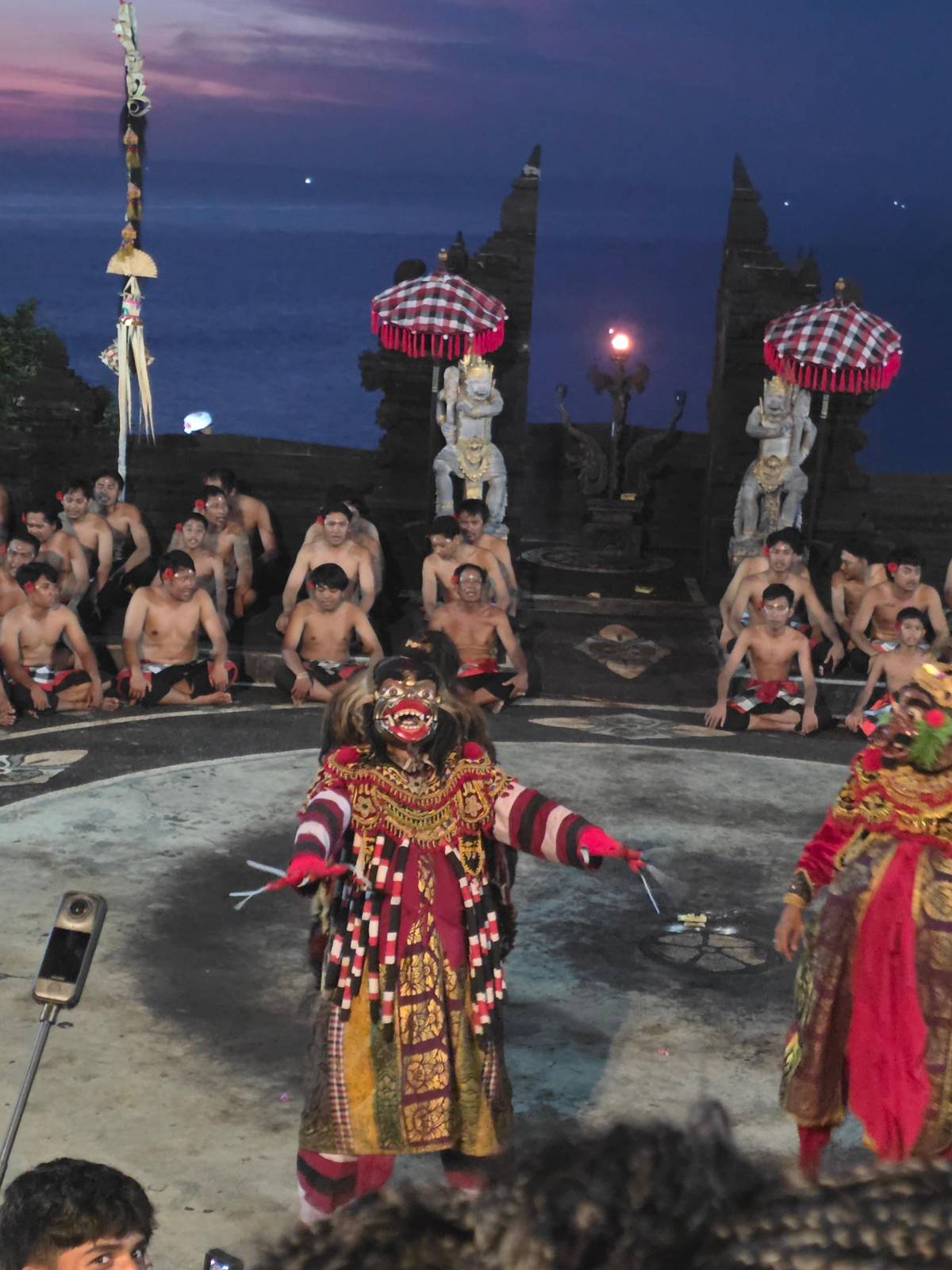 The villain
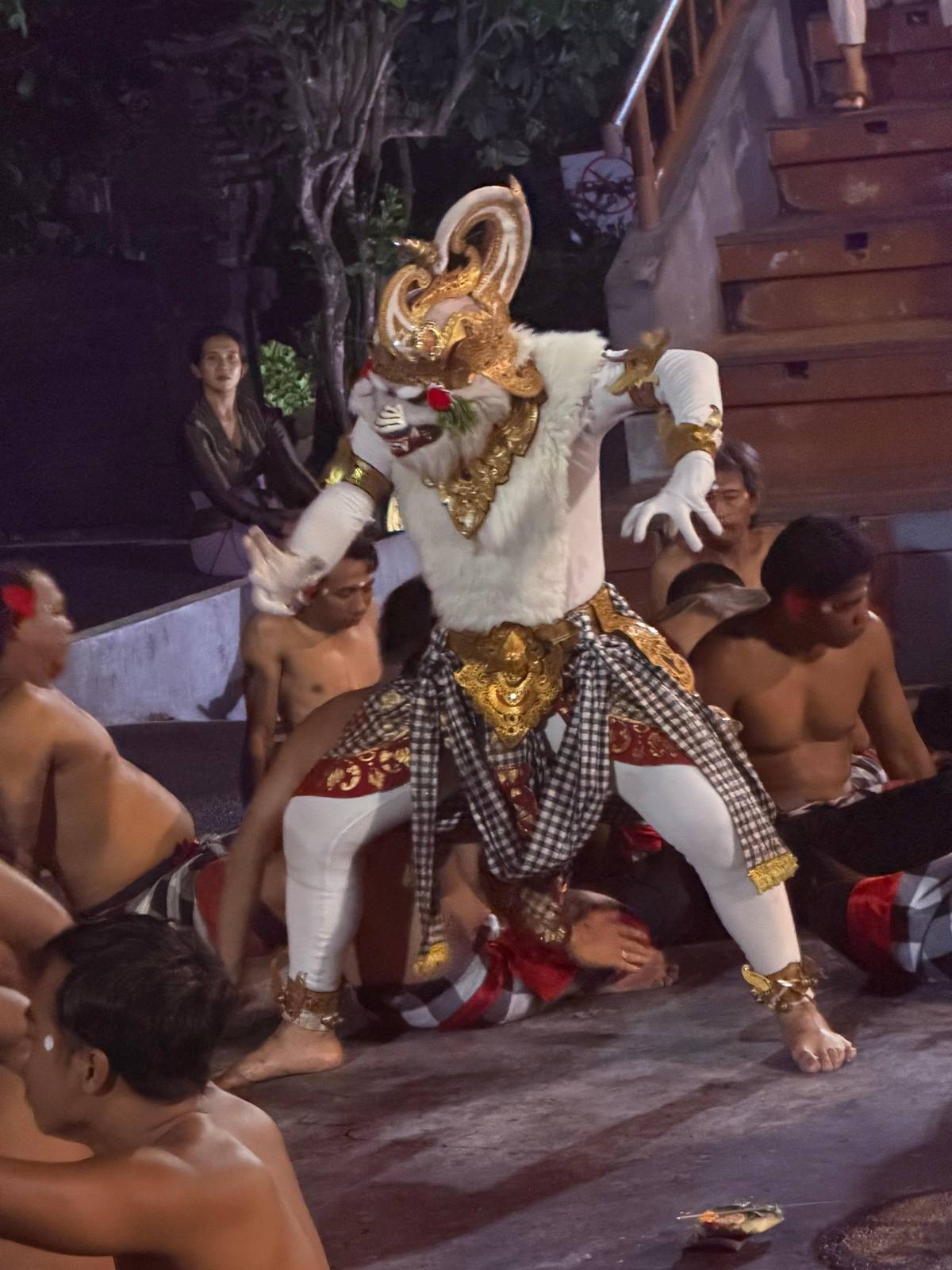 The hero of the fire
The white monkey warrior
What to watch for
Choose what draws you most
From the abduction on, the chorus turns the circle into his palace.8
He sets the high and low notes and narrates.14
It is believed to drive away evil spirits.15
Mudra and facial expressions tell the story without dialog.7
Inspired by the sacred Sanghyang dance, which is performed to ward off negative spirits, they adapted the ritual into a dramatic storytelling dance based on the Ramayana epic
The kecak also goes by the name Bali monkey dance, and it makes sense once you see the circle. The chanting chorus of men represents an army of monkeys, according to the Ministry of Tourism, and the hero of the fire scene is a monkey too, the white warrior Hanoman.31
The monkeys of the story are allies, not tricksters. They are Sugriwa's troops, sent to help Rama and to find the captive Shinta, and they win the battle at the end.911 The repeated cry of the chorus, cak, is the sound of that army, and its rise and fall carries the action forward when no instrument plays.
At Uluwatu the name has a second meaning. Long-tailed macaques live around the temple, about 650 of them according to the management, and they are believed to be the temple's guardians.1617 The temple even has a statue of Kumbakarna, a warrior from the Ramayana, among its monuments.18 Here, story and setting overlap.
Checklist
Video
Nothing loads until you tap play.
The kecak dance history is shorter than its ritual look suggests. Uluwatu's managing body credits it to the Balinese artist Wayan Limbak, who worked on it in the 1930s alongside Walter Spies, a painter and musician from Germany.4 Their source was older: the sacred Sanghyang dance, performed to ward off negative spirits, which they adapted into a storytelling dance based on the Ramayana.5
The Ministry of Tourism is frank about the purpose. It describes the sanghyang as a dance to summon ancestral spirits, and says Limbak and Spies added dramatic elements from the Ramayana to attract foreign tourists.19 They then took the new form on a world tour, and it has been popular ever since.20
A tourist form did not stay a tourist form. The Ministry notes that kecak, though first developed for visitors, has become an essential part of Bali's cultural identity, and that art schools and cultural studios keep training the young in its movements.2122 It is not among the nine Balinese dances inscribed by UNESCO, whose list names Barong Ket, Legong Keraton, Rejang and the rest of the nine.23
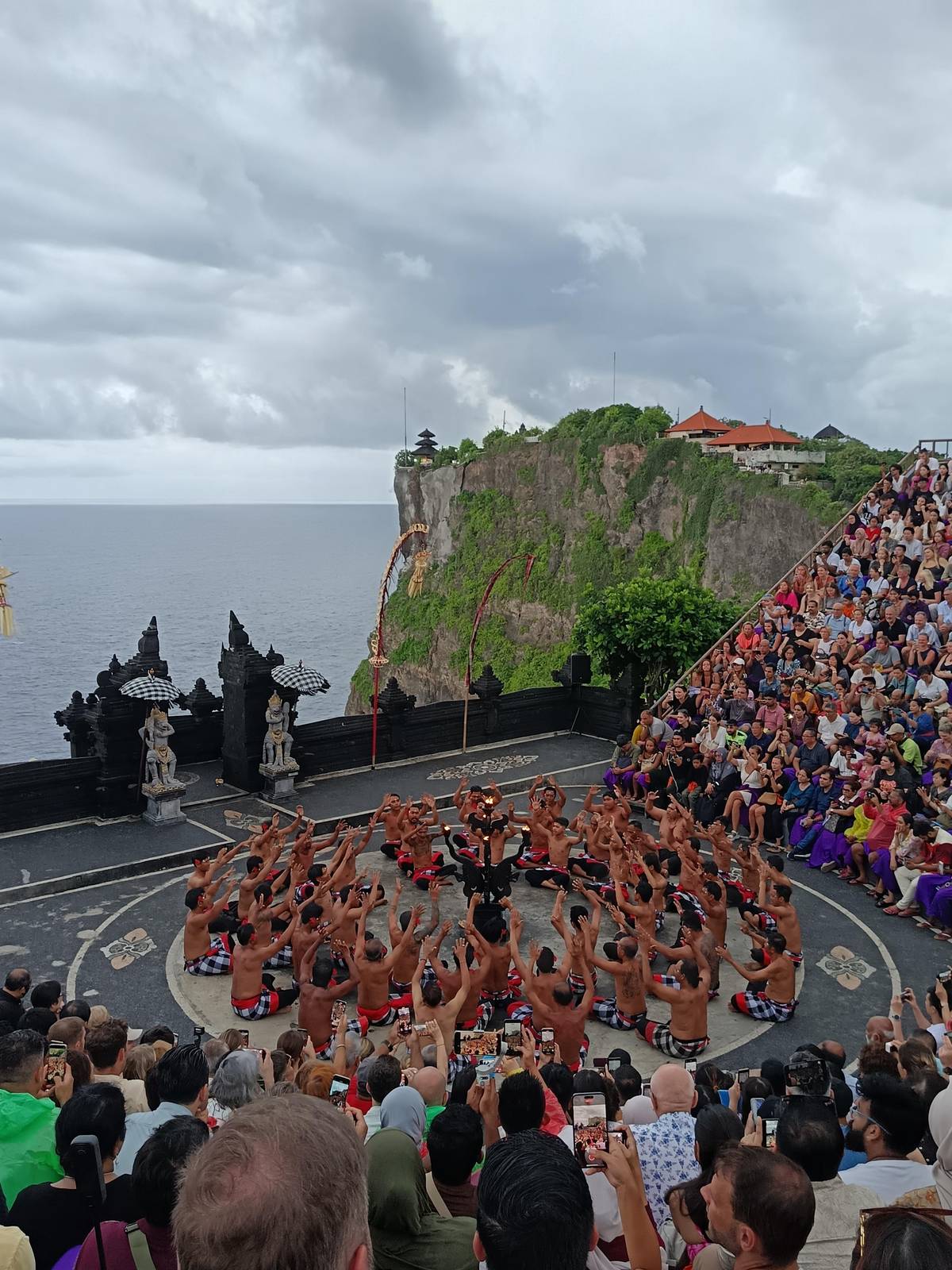
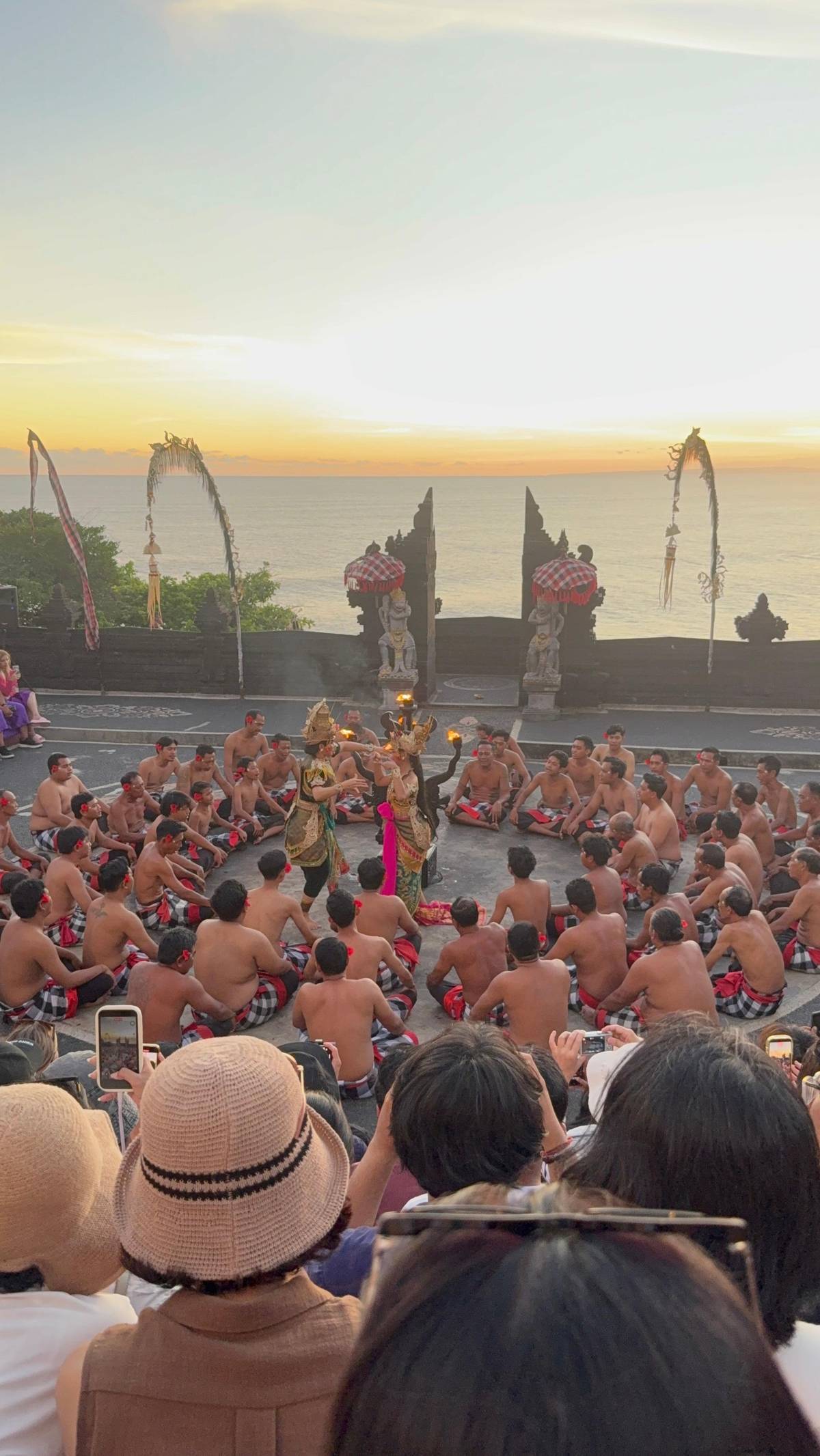
Ask about the kecak dance meaning and you get three answers, one for each element of the show. The circle first: the management explains that the round formation of chanting men signifies unity and spiritual protection.24 The chorus sits cross-legged, raising their hands and shaking their bodies to the rhythm, the Ministry adds.25
Then the sound. In Balinese tradition, the Ministry says, the cry of cak is believed to drive away evil spirits and bring protective power.15 That links the stage show back to the Sanghyang ritual it grew from, a dance meant to keep harm away.5 Listening for the changes in the chant is as much a part of the evening as watching the dancers.
Finally the fire. The fire used in the performance is believed to have purifying and protective properties, the Uluwatu management writes, and the scene in which Hanoman burns Rahwana's palace stands for the triumph of good over evil.242 By the time the flames appear, the meaning has been built up for most of an hour.
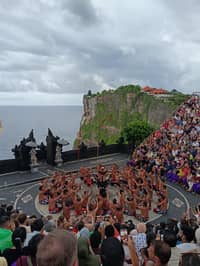
There is no gamelan. Kecak relies entirely on the synchronized chanting of a large male chorus, the management says, producing its famous cak-cak-cak.26 The Ministry counts the circle at about 50-60 bare-chested men in Balinese sarongs, sitting around a set of torches, and elsewhere puts the number of performers at tens to hundreds.2728
Within the chorus one voice leads. A soloist indicates the high and low notes and also acts as narrator, which is how the story moves forward without spoken lines.14 Watch the leader as well as the dancers: when the rhythm speeds up or breaks off, a new scene is beginning.
Light is the last instrument. The show is held in the open air at sunset, and as the story continues into the dark the only light comes from flickering bamboo torches, the Ministry describes.29 At Uluwatu the performance usually begins while there is still some daylight, so the story literally moves from day into night.30
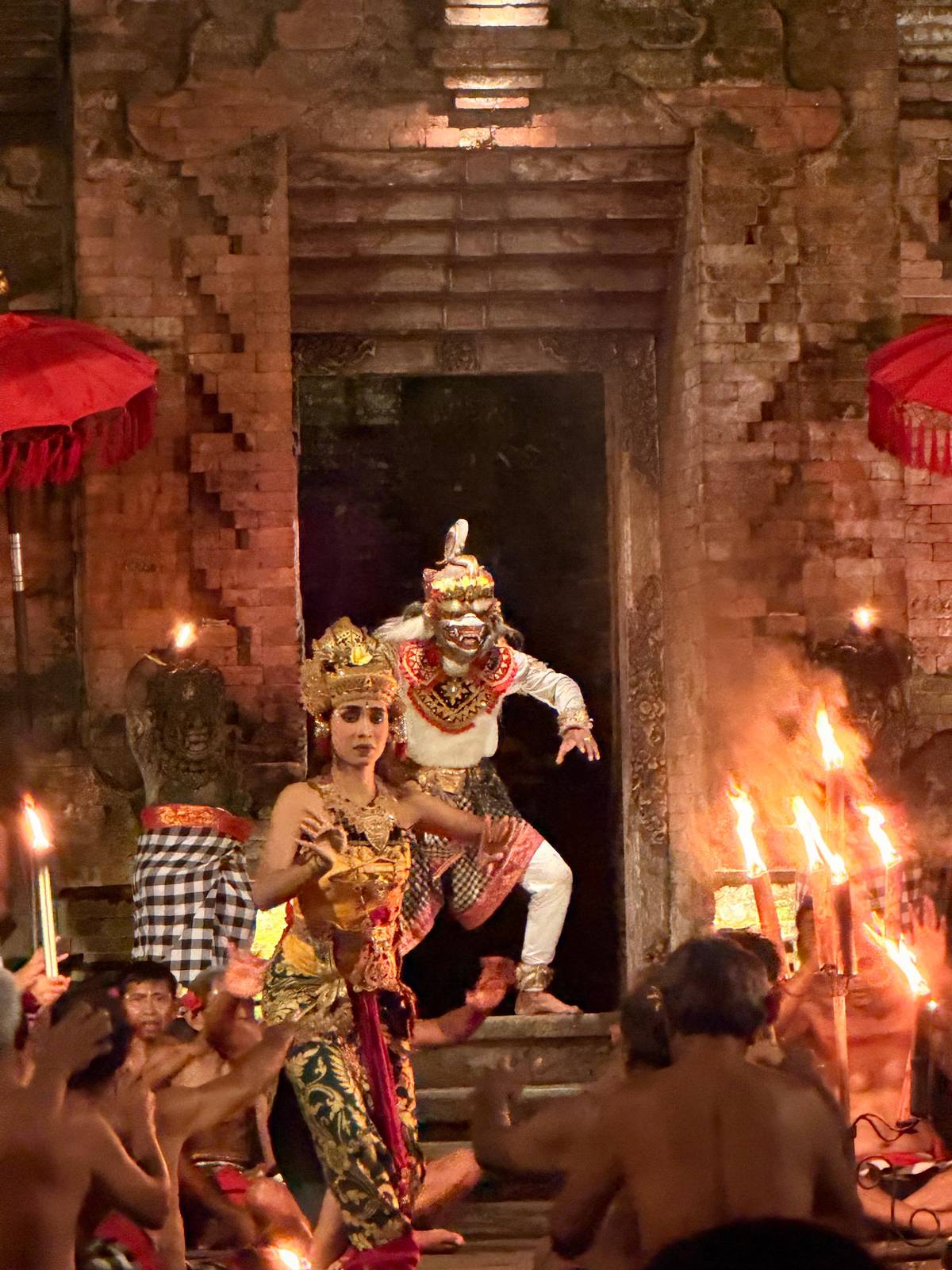
Knowing the plot changes where you look. In the first minutes, while the chorus settles into its rhythm, find Rama and Shinta: the couple moves slowly and gracefully, and their gestures set the gentle mood that Rahwana is about to break. When the demon king arrives, the chant sharpens and the circle tightens around him.
The middle of the show belongs to the search. Hanoman's arrival is easy to spot, a white figure moving faster and more playfully than anyone else in the circle, and the management's own article notes that the fire sequence follows only once the conflict and the characters are in place.13 If you have read the outline, the capture and the circle of flames come as a payoff rather than a surprise.
Afterwards, the temple has its own echo of the epic. Uluwatu's statue of Kumbakarna depicts a warrior from the Ramayana, standing among the cliffs where the macaques live.18 A look at it on the way out ties the evening together: the same story you just heard chanted is carved in stone a short walk from the stage.
Your seat
One-hour show ticket, temple entry paid at the gate, free cancellation up to 2 days before.
A chapter of the Ramayana. Rahwana abducts Shinta, and the white monkey Hanoman helps Rama rescue her.1
The white monkey warrior. He is the commander sent by the monkey king Sugriwa to find Shinta, and the hero of the fire scene.910
Purification and protection. The fire is believed to purify and protect, and the burning palace stands for good over evil.242
Wayan Limbak and Walter Spies. The Uluwatu management says they developed it in the 1930s from the sacred Sanghyang dance.45
The voices are the music. Kecak uses no instruments; a large male chorus chants the rhythm, led by a soloist.2614
It is not among the nine. UNESCO's 2015 inscription covers nine dances, including Barong Ket and Legong Keraton, but not kecak.3123
It helps a great deal. No one speaks; the dancers tell the story through gestures and expressions.7
Sources
Keep reading