 Most relaxed
The long afternoon
Temple paths, then the show
- Arrive
- Mid-afternoon
- Gate opens
- 16:00
- You get
- The cliff walk and a bench
Guides
Language
EnglishCurrency
US dollar · $Prices on GetYourGuide appear in your chosen currency.
Guide · Times and seats
The show starts at a fixed hour, but the evening starts long before. When to leave your hotel, when the gate opens, how long the dance runs and where on the stone benches to sit.
Editorial team, kecakfiredanceshow.comUpdated October 26, 20267-minute read31 sources
The short version
The kecak dance time at Uluwatu is not a mystery, even if search results make it look like one. The temple's managing body publishes a single schedule: the show runs every day from 18:00 to 19:00, and the gate to the amphitheater opens at 16:00.1 The Ministry of Tourism's guide agrees on the start, listing the performance every day at 6:00 pm.4
The management adds a detail that changes how you plan: the performance usually begins while there is still some daylight.5 The first part of the story is told in fading sun, and the second part in the dark, which is why the start time matters more than it seems. Arrive late and you miss the light, not just a few minutes of chanting. Plan the drive so that you are on a bench while the sky is still bright, and the first scenes will play out in warm light rather than under the lamps.
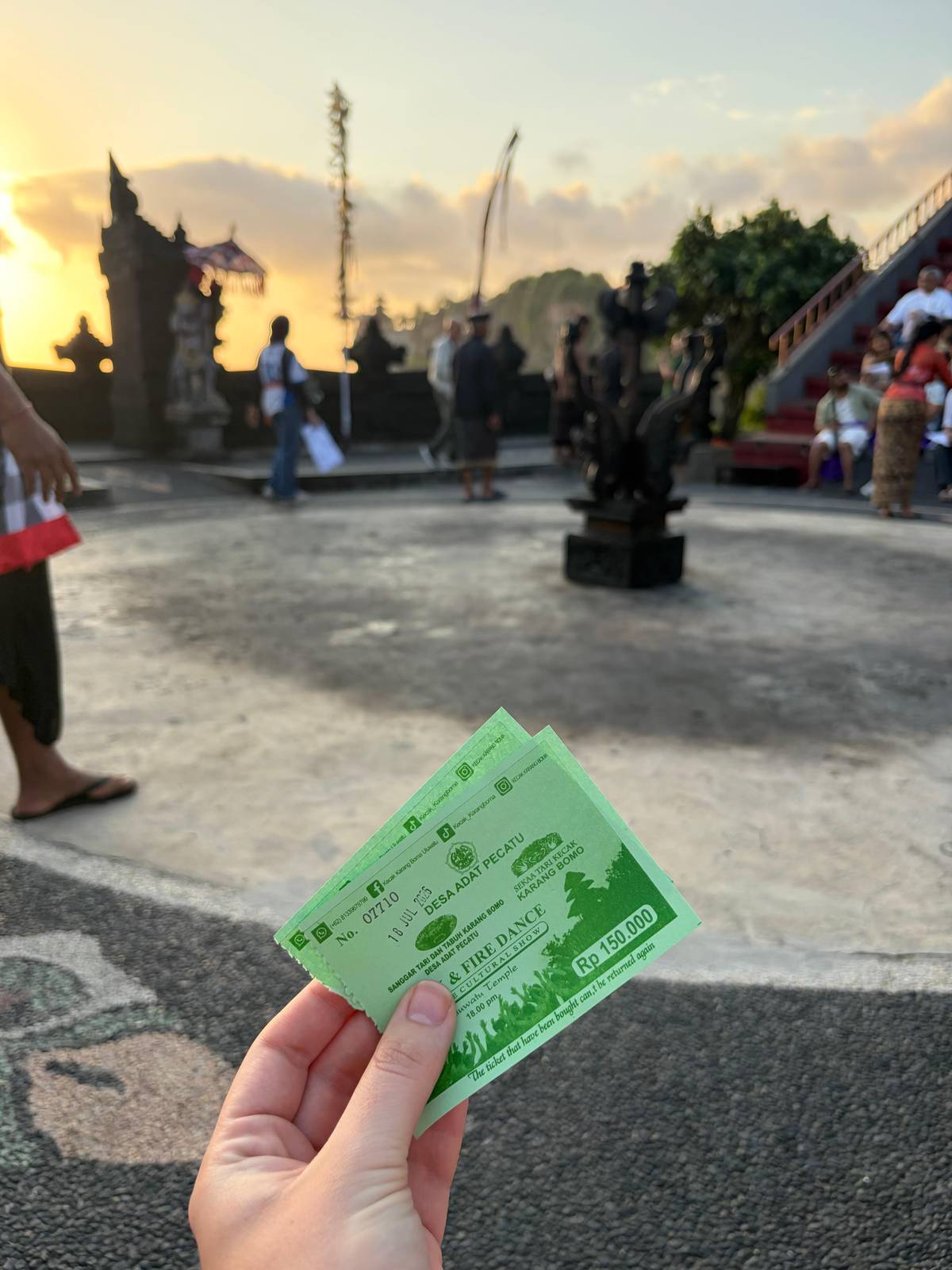
Busy months bring a second option. One ticket listing names a 6 PM first session and a 7 PM second session in the evening season. The official page shows only the 18:00 show, so treat the later one as something particular sellers offer, check it on the voucher, and remember that a 7 PM start means the show begins after sunset.
The evening by the clock
How long is the kecak dance? On the official schedule it fills one hour, from 18:00 to 19:00, and the ticket this site books is sold as a 1-hour show.1 Allow most of an afternoon for the whole visit, though: the gate, the temple walk and the wait on the benches come first. With the drive, the queue at the temple gate and the walk along the cliff, a kecak evening easily takes from mid-afternoon until well after dark.
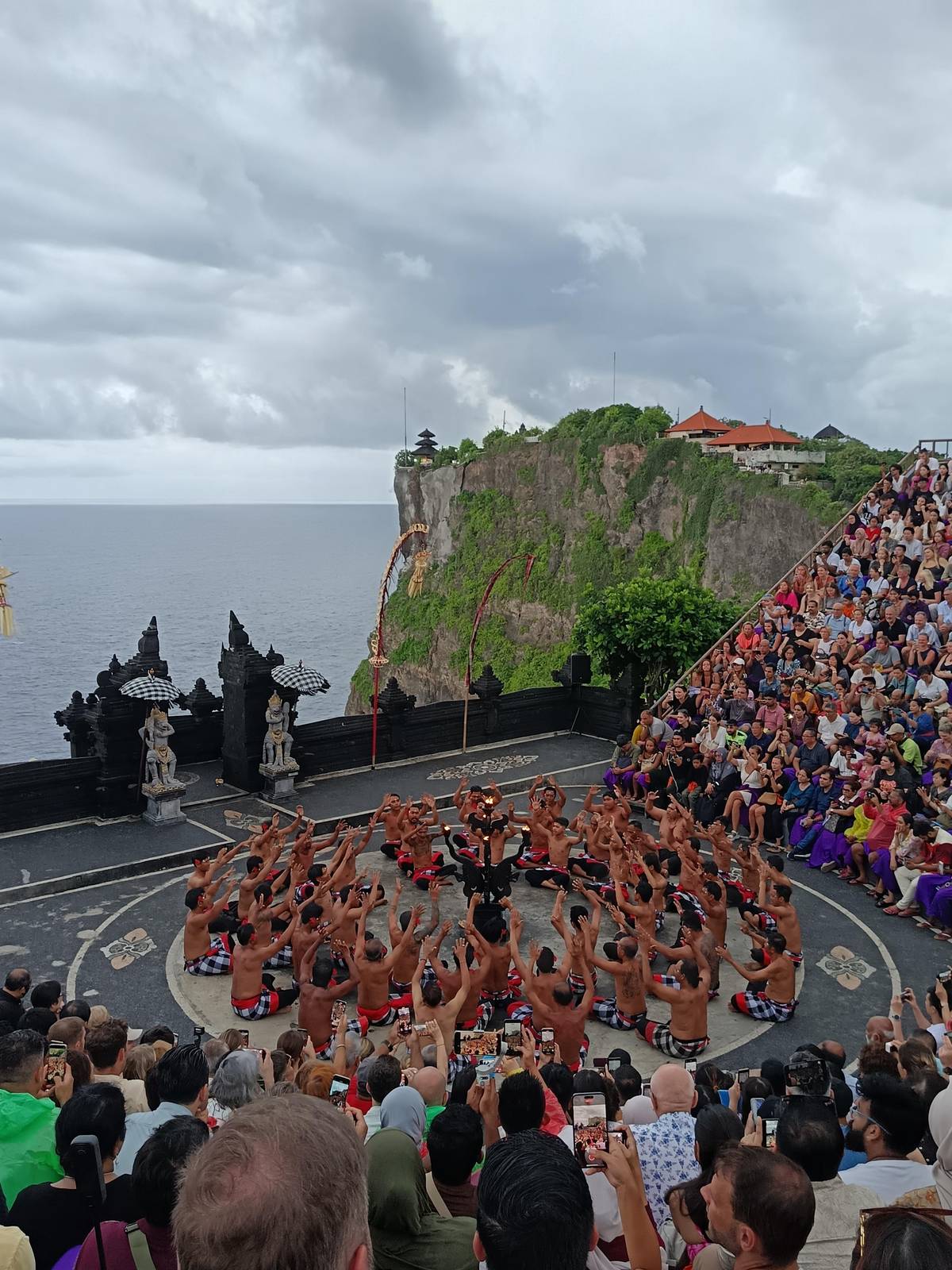
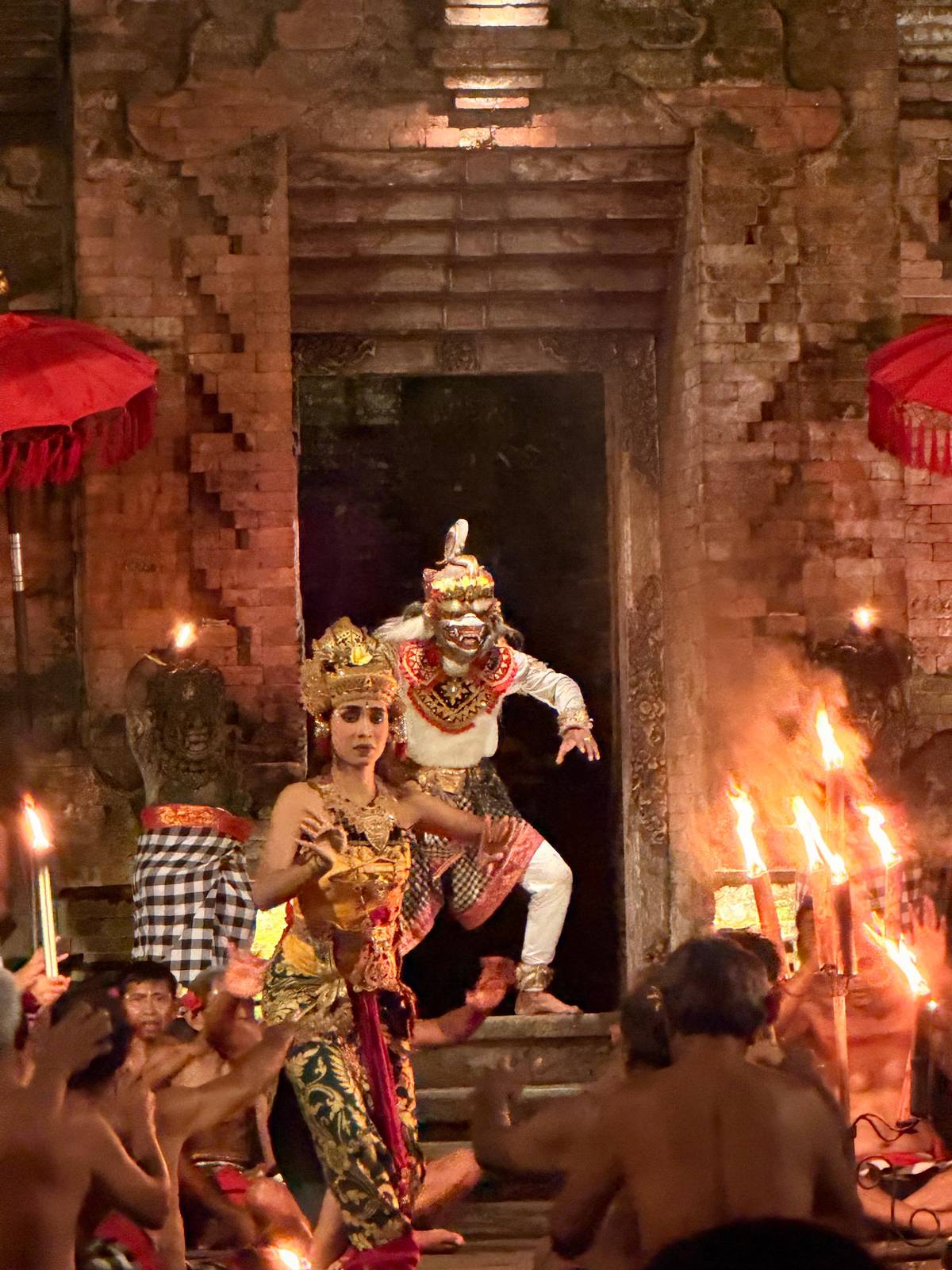
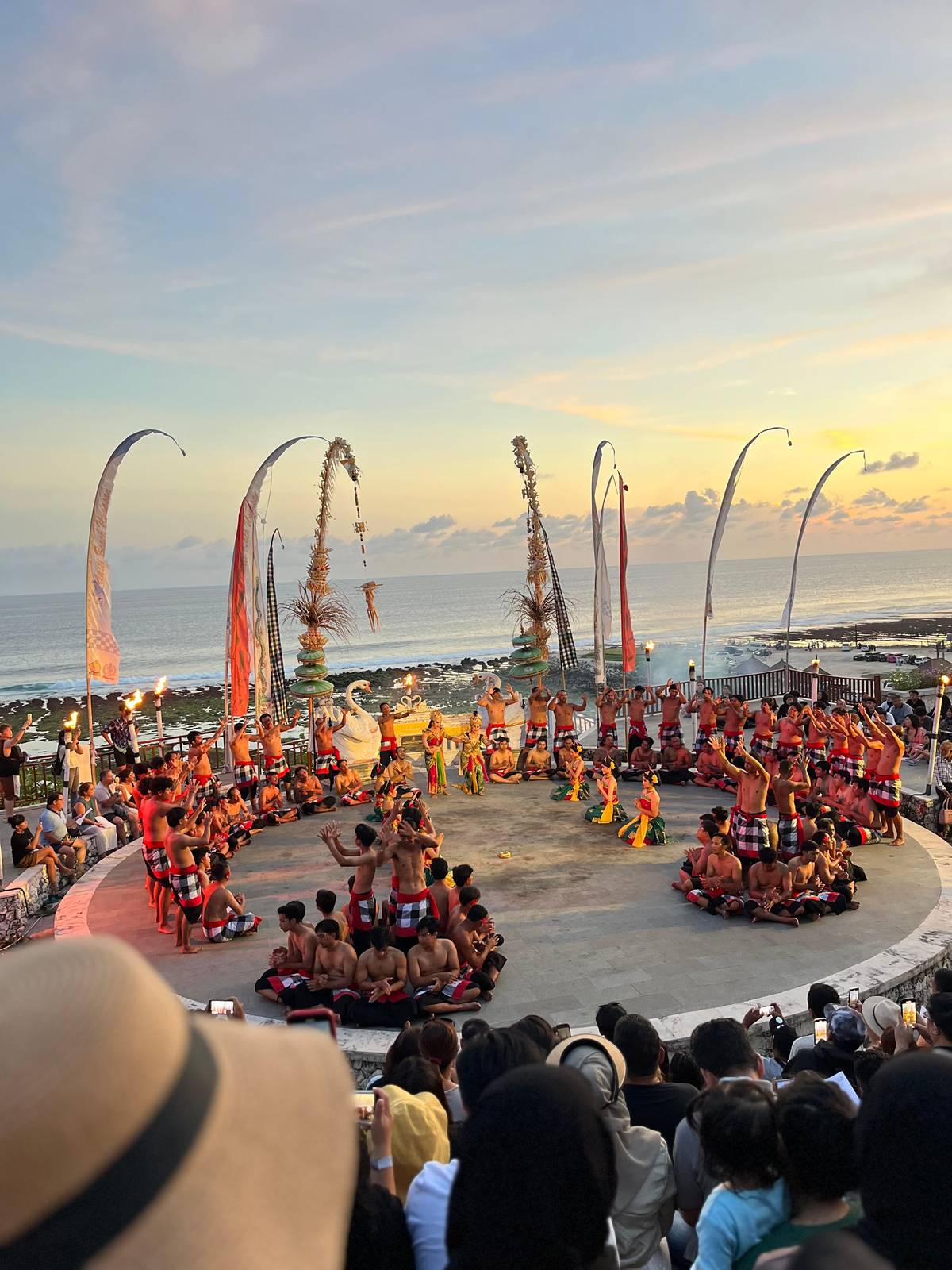
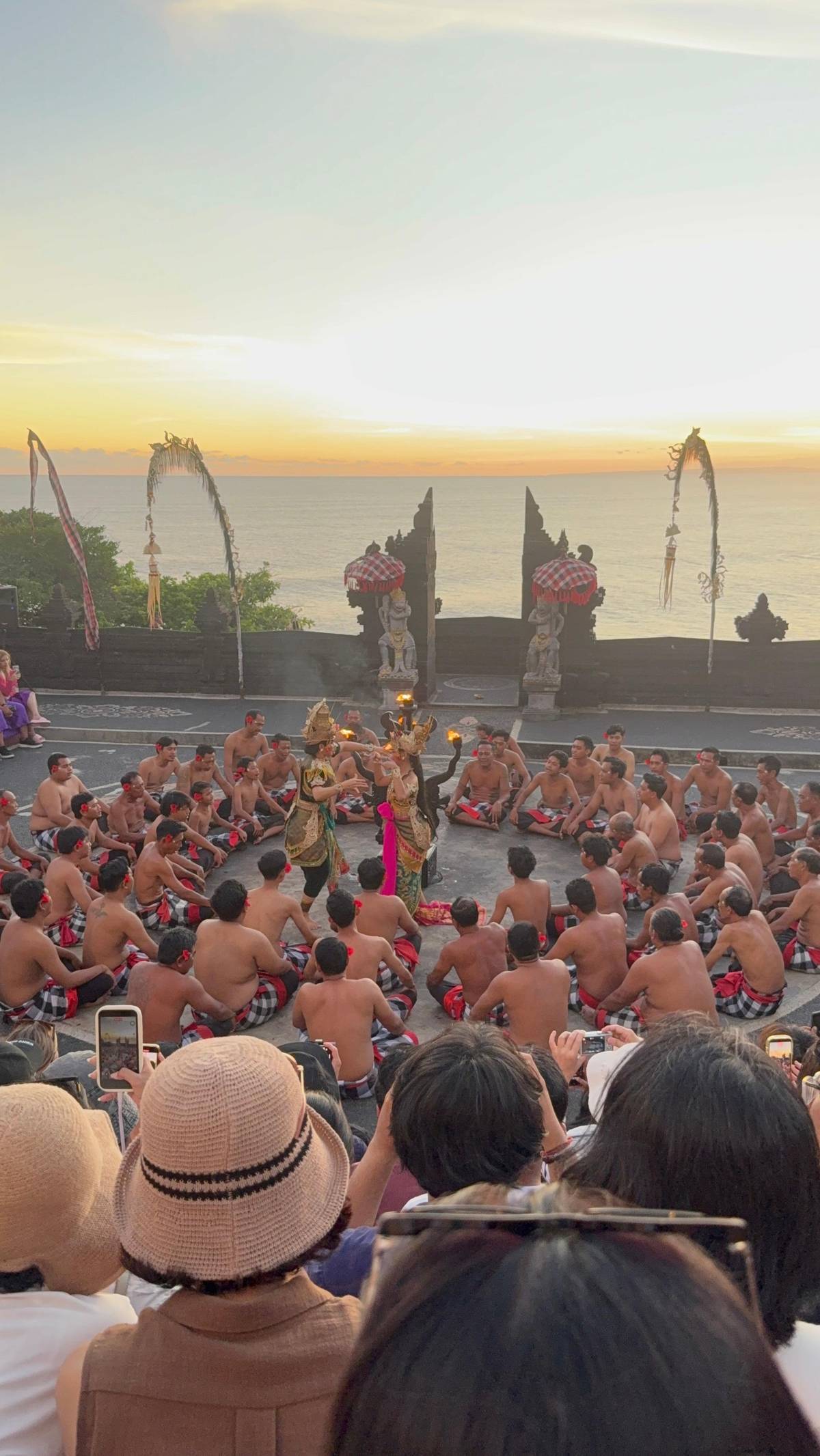
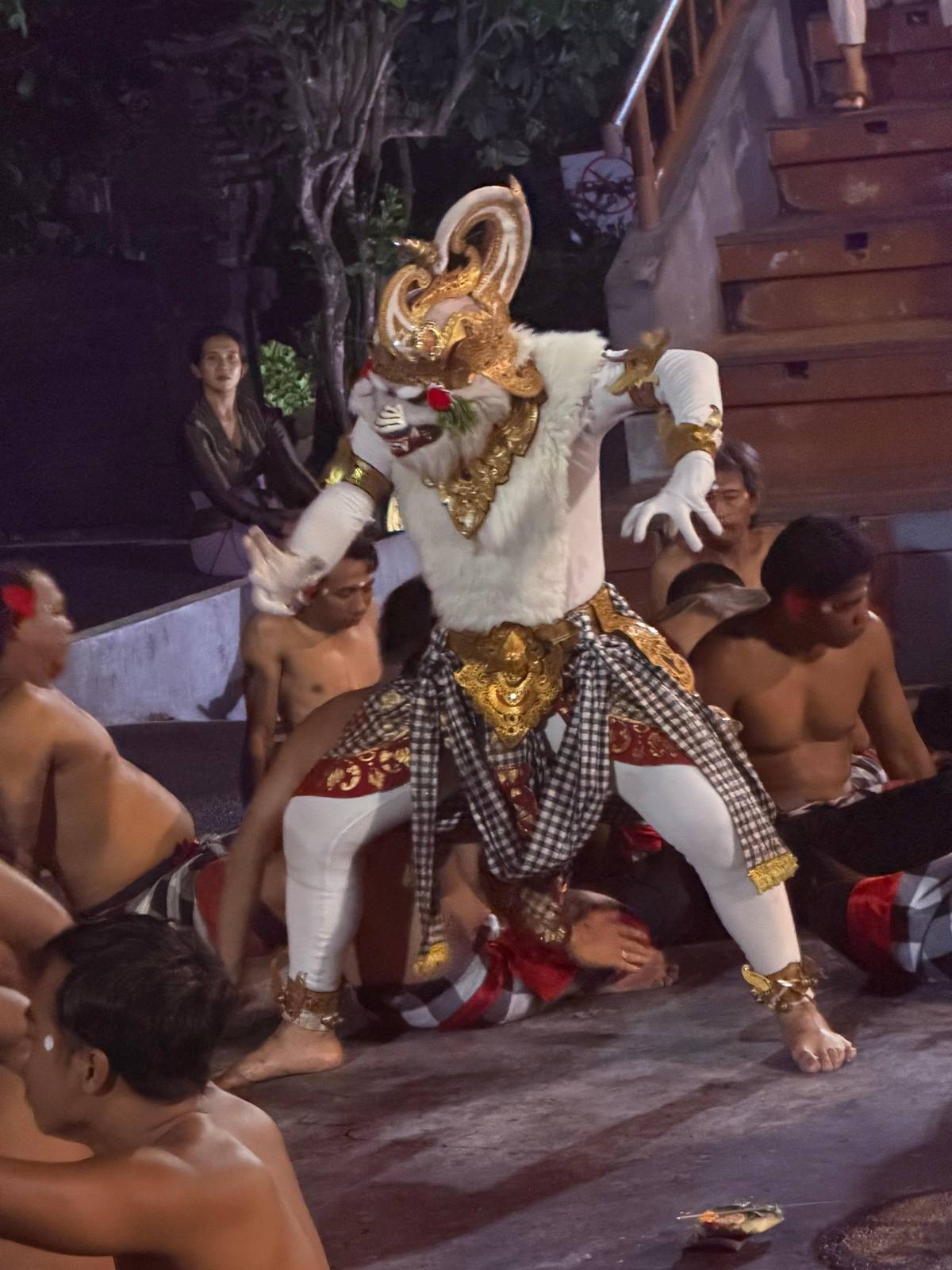
The hour has a clear shape. A large chorus of men sits in a circle and chants the rhythm without instruments, while costumed dancers act out a chapter of the Ramayana.78 The fire scene arrives late; the management's own article notes that it comes after the story has set up its conflict and its characters.9
That is the reason not to leave early to beat the car park. Walking around during the performance disturbs other people and interferes with the show, the management says, and the most striking moment sits near the end.1011 If you must leave before the last chant, take an aisle seat and go between scenes, quietly.
Weather by month
Times by source
| Source | Gate | Show | Arrive by |
|---|---|---|---|
| Temple management | 16:00 | 18:00 to 19:00 | Before 5:00 PM |
| Ministry of Tourism | Not stated | 6:00 pm | Before 17:00 WITA |
| Ticket on this site | Not stated | Slot chosen at booking | 30 minutes before the slot |
| Bundled ticket listing | Not stated | 6 PM, 7 PM in the evening season | Not stated |
The temple management, the Ministry of Tourism's kecak guide and the listings' own notes; the management runs the amphitheater.13412
Three ways to time it
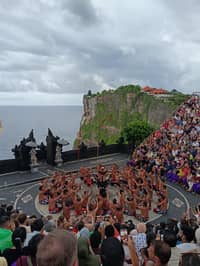
Most relaxedTemple paths, then the show
 The classic
Straight to the benches
 Busy months
Where a seller offers it
Decision helper
Choose the line that fits how you like to watch
The fire scene comes late in the story; stay seated to the end.9
The temple stands on a steep cliff; keep children supervised.13
The sunset is bright and the amphitheater gets hot.14
Tickets may sell out quickly in peak seasons.2
6:00 PM is the performance time. It is not the recommended arrival time.
Work backwards from the 18:00 start.1 The management asks visitors to arrive at least one hour before the performance, and its tips say the best seats go to those who come before 5:00 PM.23 The Ministry of Tourism gives the same advice in its own words: be there before 17:00 WITA for the best seat and the sunset.12
The management even spells it out: 6:00 PM is the performance time, not the recommended arrival time.15 The temple itself opens at 07:00 AM, and arriving before 5:00 PM leaves time to see the cliff before the show.616 If the temple paths matter to you, come earlier still and give them an unhurried hour.
Then add the road. Kuta and Seminyak are about 45 minutes away, Ubud about 1.5 to 2 hours, and in the holiday season traffic grows heavy in the late afternoon before the kecak.171819 Leaving Ubud after lunch is not too early. A driver who knows the peninsula is worth more on this road than a faster car. And keep a little slack for parking: in the busy months the car parks near the gate fill up as fast as the benches do.
Checklist
Video
Nothing loads until you tap play.
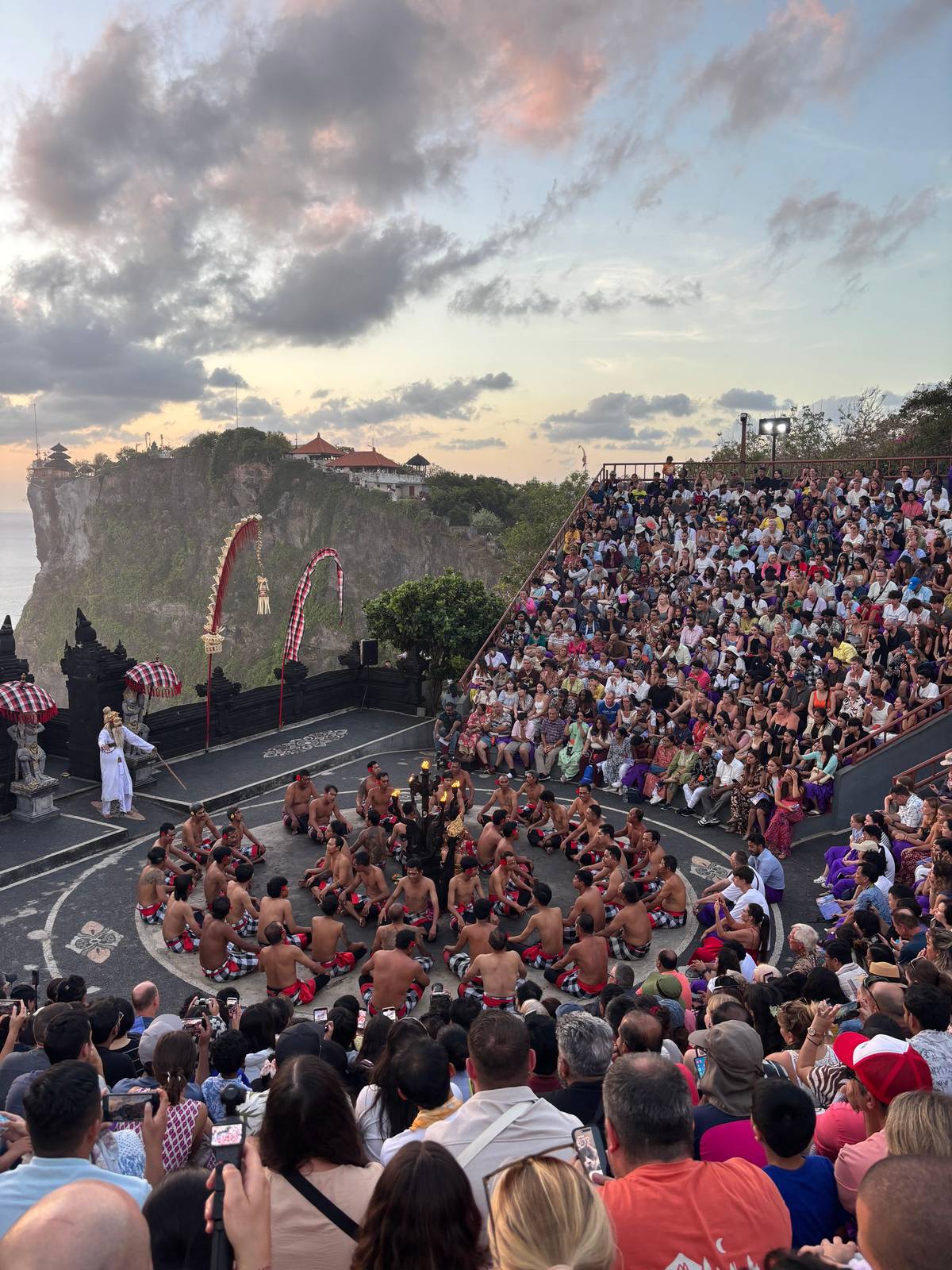
The amphitheater holds up to 1,200 spectators per show, on stone benches that rise in tiers around the circle.2021 Where is the best seat for the kecak dance at Uluwatu? It depends on what you want: lower rows bring you close to the dancers and the flames, higher rows show the whole circle with the sea behind it.
Arriving early widens your choice but does not book you a bench. The management says plainly that coming earlier does not guarantee one specific seat; it gives you time to follow the seating process calmly, and it asks the audience to follow staff seating guidance and stay seated once the show is on.2223 Show the staff your ticket, take the place they point to, and save the arguing for the beach.
Comfort is part of the choice. The seating is stone, the sunset can be bright and the amphitheater gets hot, so the management suggests comfortable shoes, sunglasses and water.2114 A folded scarf makes a cushion; keep any hat in your bag, as the temple's rules advise against wearing one near the monkeys.24
Does the kecak dance happen in rain? Ticket sellers plan for it: the listing on this site hands out free raincoats when it rains, and another ticket listing says the same. One sunset tour notes that in bad weather the kecak is performed on a smaller stage. None of the official pages promises a refund for weather. Read your own ticket's conditions on weather before you book in the wet months.
Rain follows the seasons. On the Ministry of Tourism's calendar the island is dry from April to October and wet from November to March.25 BMKG's Denpasar averages give January 345 mm of rain and August only 25 mm.26 An evening in the dry months is far more likely to give you the full sunset behind the chorus.
In the wet months, keep the ticket flexible for as long as the listing allows, and watch the sky over the afternoon. A grey afternoon is not a lost evening; do not cancel on the first cloud. Pack a light layer as well as the raincoat: the wind on the cliff top feels cooler once the sun has gone.
With the show at the end of the day, the hours before it are yours to fill on the Bukit peninsula. Labuan Sait Beach, also known as Padang-Padang, lies close to the temple, and the management notes that some 50 macaques live there too.2728 A swim and a late lunch on the coast put you at the gate with time to spare.
If you are coming from Ubud, a whole day in the south is easier than a dash down and back. The Ministry of Tourism suggests stopping on the way at Garuda Wisnu Kencana or Padang-Padang Beach, and the GWK park stages its own dances through the day.2930 Anything that ends near Uluwatu by mid-afternoon fits the evening well.
Dinner comes last. Several sunset tours go straight from the show to Jimbaran Bay, and one lists about 60 minutes there after an hour at the kecak. If you are travelling on your own ticket, book a table for later in the evening, allow for the slow first stretch out of the car park, and enjoy the evening without watching the clock.
The setting is the reason so many people want the 18:00 show and not the later one. The management describes the amphitheater as 70 m above the Indian Ocean, with the performance taking place as the sun sets behind the temple.31 The chorus, the cliff and the sky all change colour during the first half of the hour.
Daylight barely changes on Bali through the year. Our own calculation for Uluwatu gives the sun 12.6 hours above the horizon in mid-January and 11.6 hours in mid-July.26 The sky at the start of the show looks much the same in every month: clouds, not the calendar, decide whether you get a clean sunset.
After the last chant the crowd leaves at once, and the temple itself closes at 07:00 PM.6 Agree on a meeting point with your driver before the show, keep your torch or phone light ready for the path, and expect the first stretch of road back to move slowly while the car park empties.
Your seat
One-hour show ticket, temple entry paid at the gate, free cancellation up to 2 days before.
At 18:00 every day. The temple management lists the show from 18:00 to 19:00 daily, with the gate open from 16:00.1
About an hour. The official schedule runs 18:00 to 19:00, and the ticket booked here is sold as a 1-hour show.1
Some sellers list one. One listing names a 7 PM second session in the evening season; the official page lists only the 18:00 show.1
Before 5:00 PM. The management says the best seats go to those who come before 5:00 PM and asks for at least an hour's margin.32
No, it only gives you choice. The management says earlier arrival does not guarantee one specific seat; follow the staff's seating guidance.2223
Sellers plan for rain. Raincoats are handed out on the ticket booked here, and one tour notes a smaller stage in bad weather.
Sources