 Watch, don't join
Sunday feeding
The only supervised feeding
- When
- Sundays, 4:00 PM
- Where
- Kumba Karna statue
- Who feeds
- Temple staff
Guides
Language
EnglishCurrency
US dollar · $Prices on GetYourGuide appear in your chosen currency.
Guide · Monkeys and safety
Hundreds of long-tailed macaques share the cliff with the kecak audience. What the temple asks of visitors, what to pack in a closed bag and what to do when a monkey wins anyway.
Editorial team, kecakfiredanceshow.comUpdated October 26, 20266-minute read36 sources
What to know first
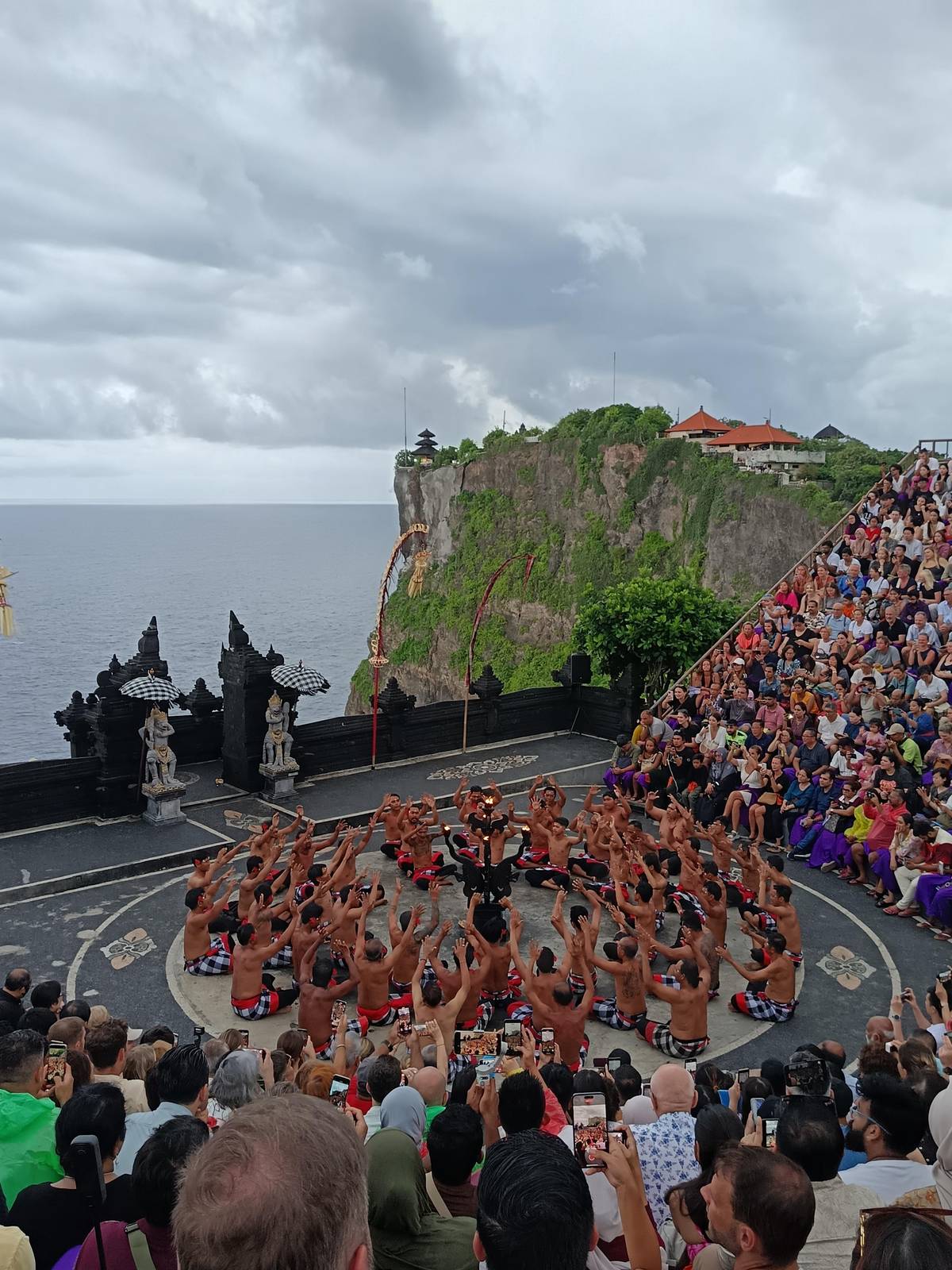
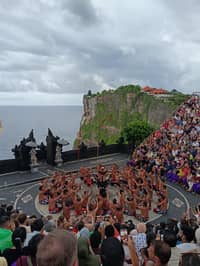
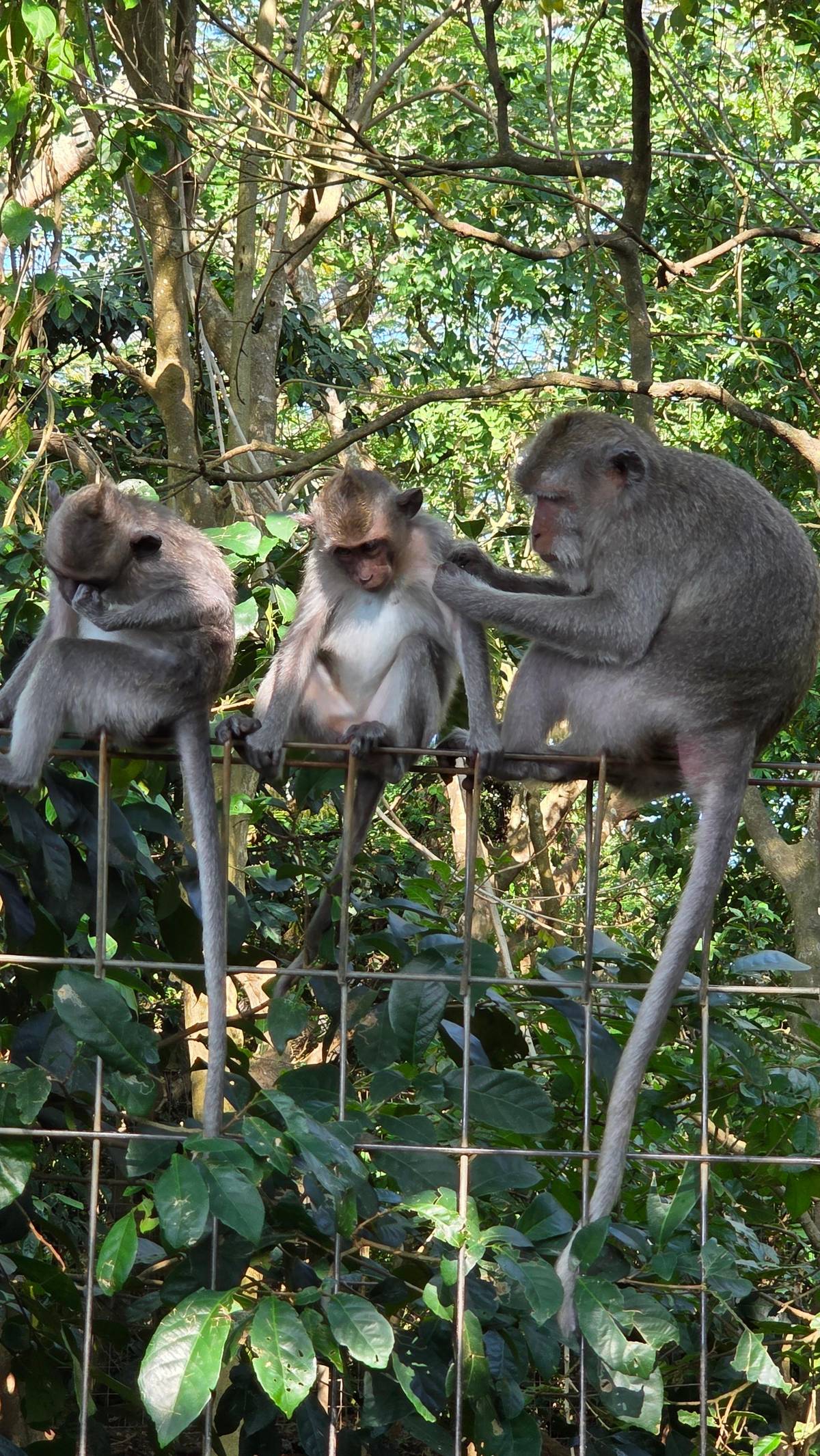
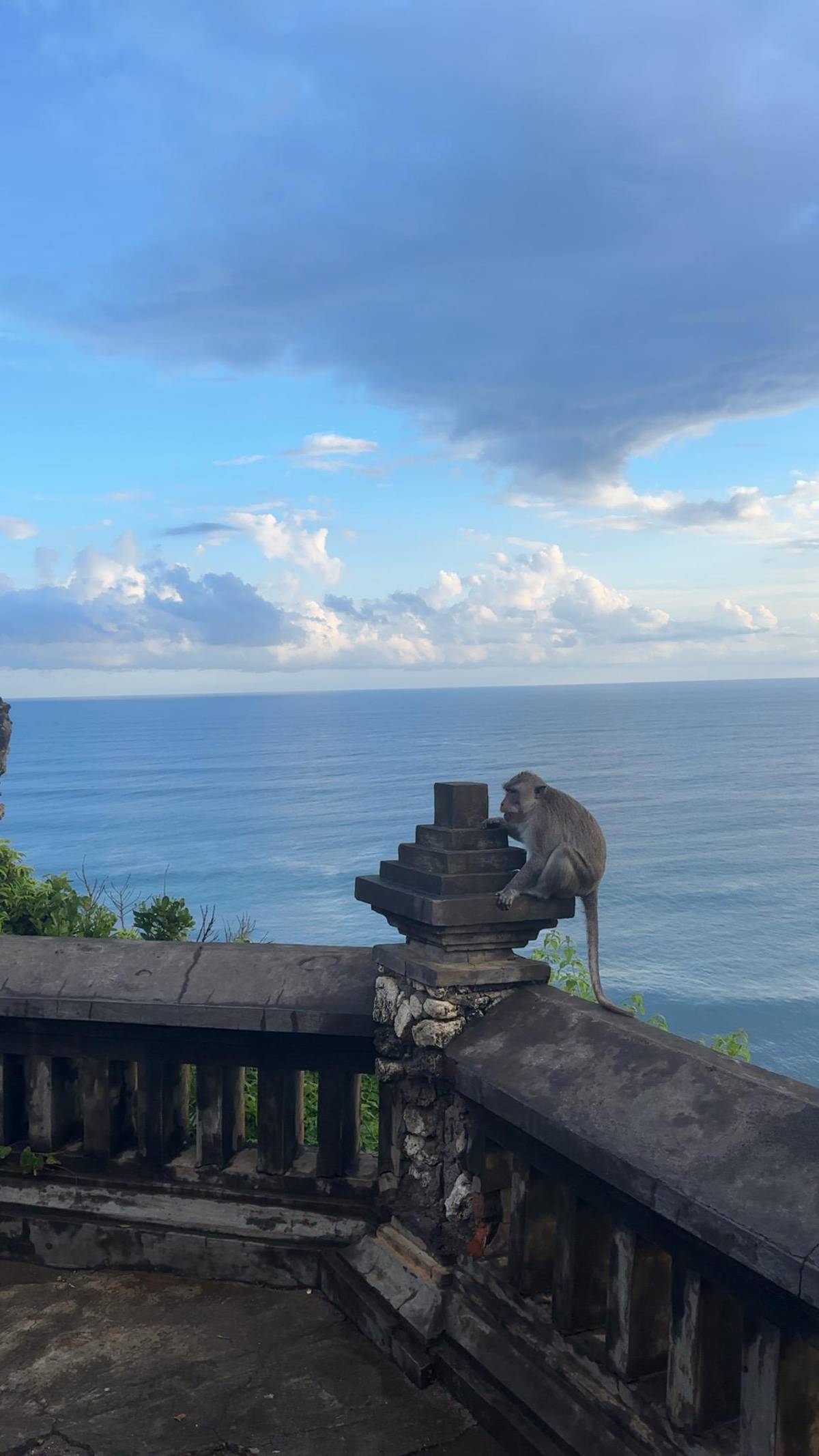
There are a lot of Uluwatu Temple monkeys, and all of them are long-tailed macaques. By the managing body's count, roughly 650 live at the temple itself, with some 50 more at Labuan Sait Beach, a short drive along the coast.1 On a kecak evening, with up to 1,200 spectators per show heading to the amphitheater, people and monkeys share the same paths.7
They are not strays. The macaques are believed to be the temple's guardians, protecting the sacred site from negative energies, and their health is followed by the caretakers together with Udayana University's veterinary faculty.89 Regular check-ups with vaccinations, tusk trimming and dietary monitoring keep the population well.10
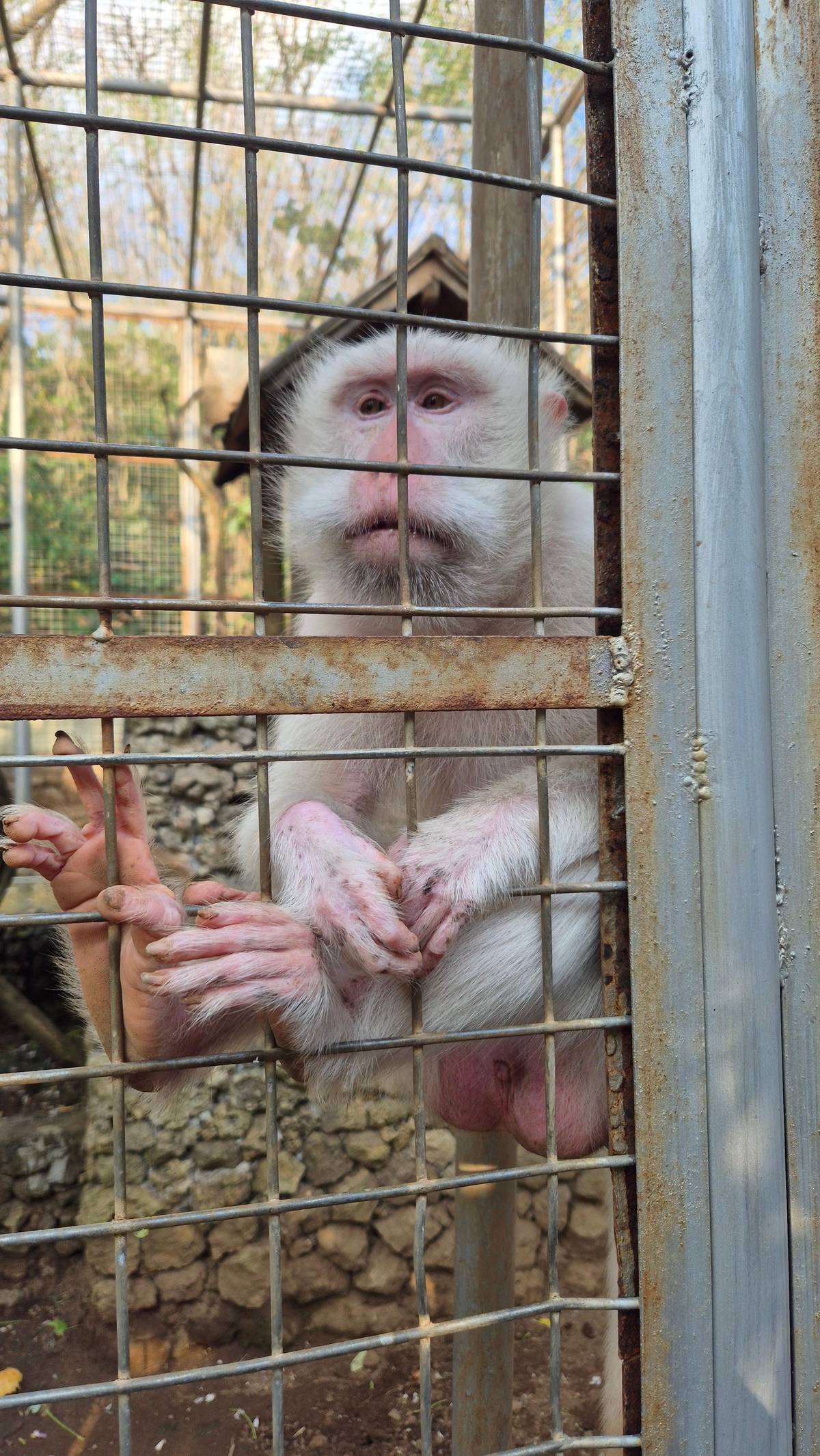
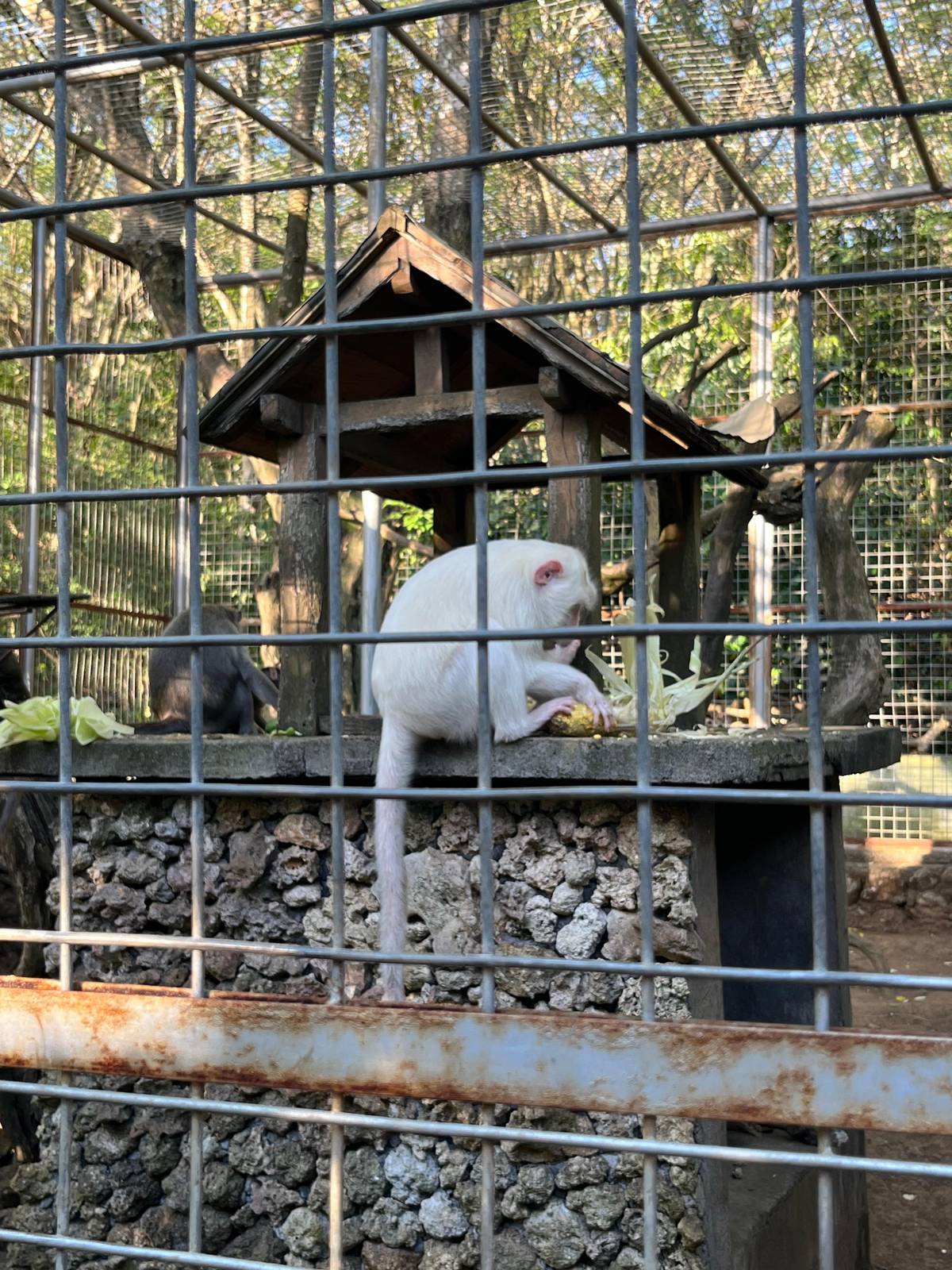
One animal lives apart. Uluwatu has a rare white macaque, which the management keeps in a protected enclosure for its safety and health.11 If you pass its enclosure, treat it as part of the temple's care for its animals, not as an attraction to crowd around. Its home is a reminder that the troop is cared for, not simply tolerated.
If it happens
The management's list is precise: keep glasses, hats and bags safe from the monkeys.14 The Ministry of Tourism puts it more bluntly, warning that the monkeys at Uluwatu like to steal glasses or hats.15 Its own rules go further still, advising visitors not to wear hats or flashy jewelry at all, as monkeys may snatch them.16
Phones, sunglasses, hats, cameras, jewelry, food, water bottles and small accessories should all go inside a properly closed bag, the management says.2 Do it before you enter the temple paths, not when a monkey is already on the wall beside you.17
Food needs the same care. Eating inside the temple area is prohibited, the management says.18 Finish your snack in the car, and keep any food and your water bottle in the closed bag until you reach your seat, as the management's list asks.2
The temple's rules
| Situation | Do | Don't |
|---|---|---|
| Entering the paths | Close your bag | Carry loose items |
| What you wear | Glasses in a case | Hats or flashy jewelry |
| Food | Leave it in the car | Eat in the temple area |
| Feeding | Watch the Sunday session | Feed a monkey yourself |
| A monkey grabs | Call temple staff | Chase, grab or shout |
| Photos | Distance and zoom | Close-ups by hand |
From the Uluwatu temple management's rules and visitor guidance.1716183456
Three things to know
Watch, don't joinThe only supervised feeding
 Rare animal
Kept for its safety
 On the beach too
Along the coast
Decision helper
Find the item you are worried about
The management lists glasses first among the things to keep safe.14
The temple's rules advise against wearing hats.16
Phones belong in a closed bag, the management says.2
Eating inside the temple area is prohibited.18
Water bottles are on the list for a closed bag.2
If you want a photograph, use distance and zoom instead of direct interaction.
Feeding the monkeys is the one thing the temple asks you never to do. The management says feeding disrupts their natural behavior and should happen only under staff supervision.3 It also asks visitors to remain calm when a monkey comes near, and warns against sudden movements.12
There is an official feeding, and it is a supervised event. It takes place every Sunday at 4:00 PM in front of the Kumba Karna statue, under the eyes of the temple staff.4 If your kecak evening falls on a Sunday, arriving for the 16:00 gate puts you near the right moment to watch, from a respectful distance, how the animals are fed properly.20
Outside that hour, food is never a tool. Offering a snack to lure a monkey for a photograph, or to buy back something it has taken, works against the care programme that keeps these animals healthy. It also teaches the troop that visitors are a source of food, and that is the problem the rules are there to prevent.
Map
First the island with every stage this site compares, then the Bukit peninsula with Uluwatu, Melasti and GWK, then the temple courts and palaces of Ubud.
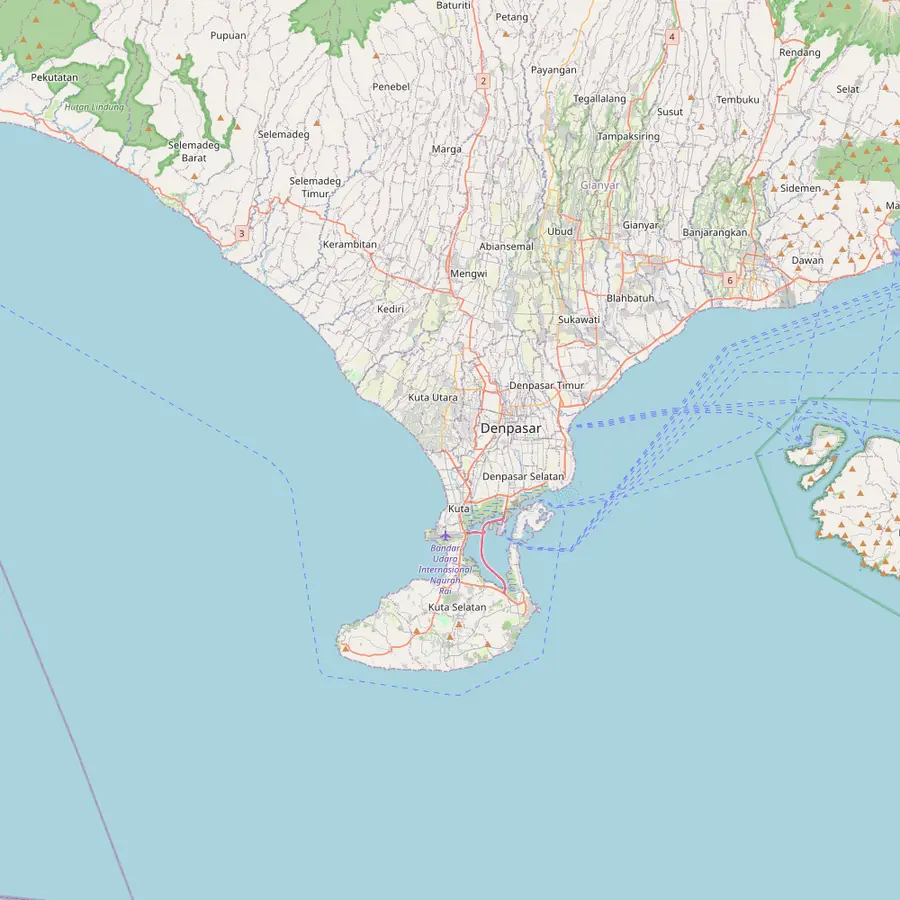 1Pura Luhur Uluwatu2Melasti Beach stage3Garuda Wisnu Kencana4Tanah Lot5Ubud6Batubulan7Denpasar8Ngurah Rai Airport
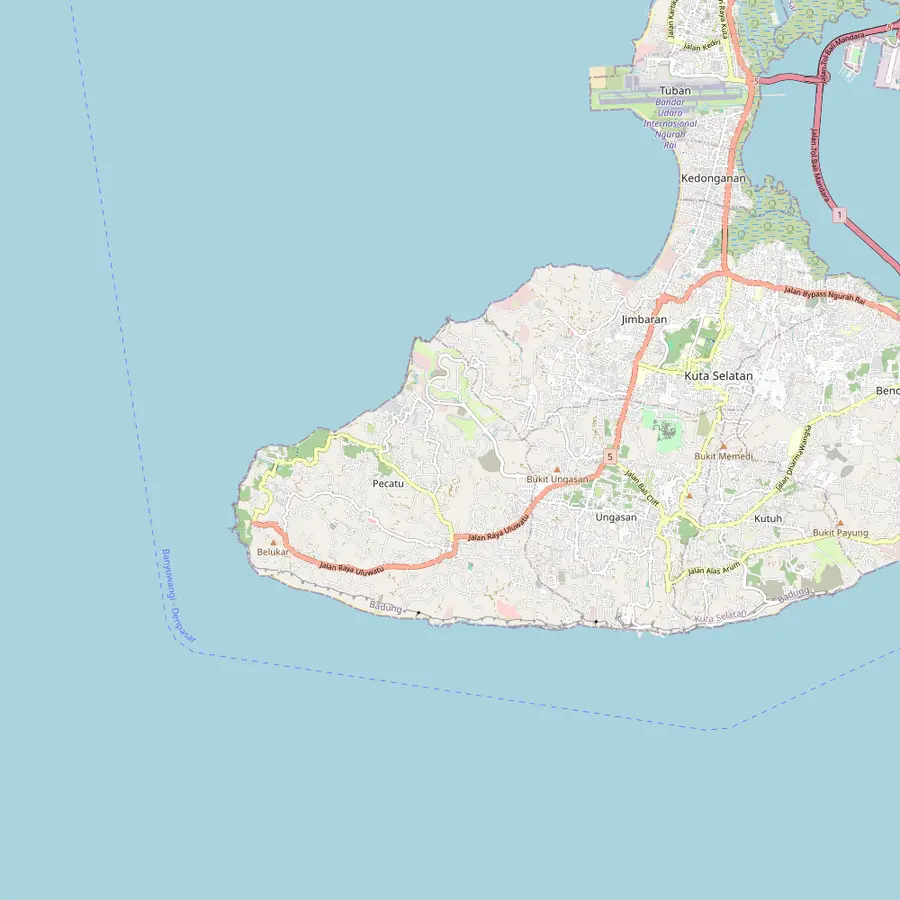 1Pura Luhur Uluwatu9Karang Boma Cliff10Labuan Sait Beach3Garuda Wisnu Kencana2Melasti Beach stage11Jimbaran Beach
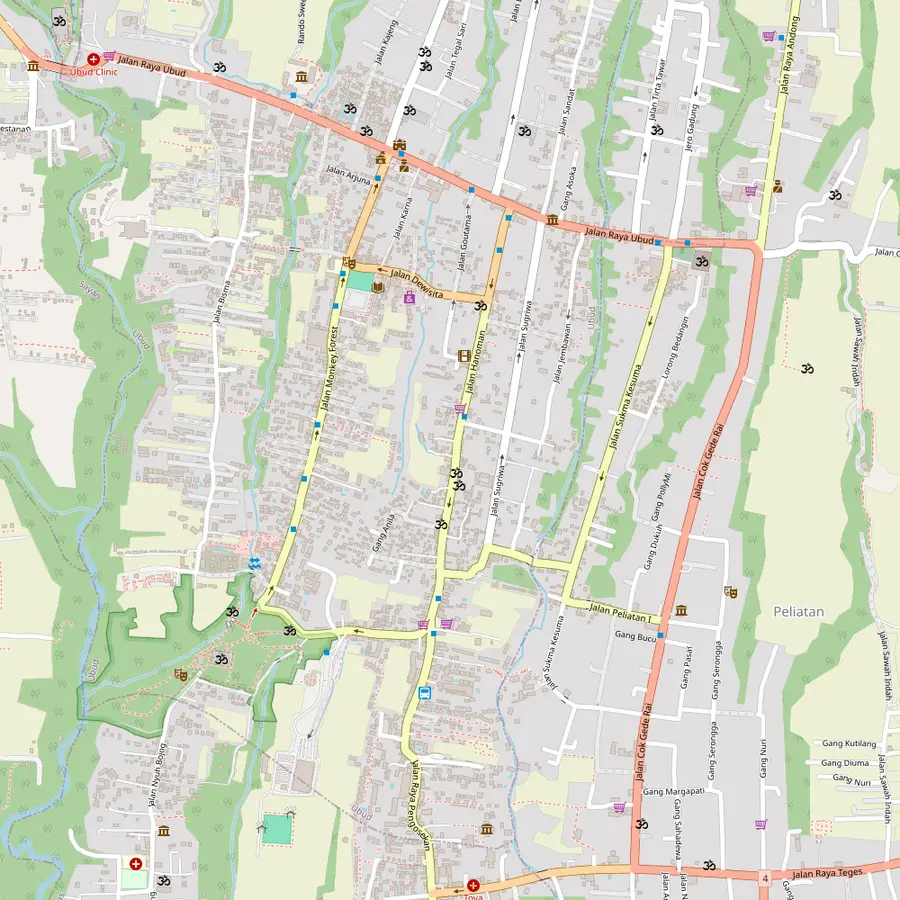 12Ubud Palace13Pura Dalem Ubud14Pura Dalem Taman Kaja15Puri Agung Peliatan16ARMA
The cliff temple whose amphitheater stages the daily kecak at 18:00.2021
In Google Maps ↗A beach stage in Ungasan, 16.3 km from the airport.2223
In Google Maps ↗The cultural park lists its own kecak every day at 6pm.24
In Google Maps ↗The sea temple; its kecak is held at De Jukung from sunset.25
In Google Maps ↗Several village stages take turns through the week.
In Google Maps ↗The village the Ministry names for Barong performances.26
In Google Maps ↗The provincial capital; Kesiman stages Barong too.26
In Google Maps ↗About 45 minutes by road from Uluwatu.27
In Google Maps ↗A separate kecak about 1 km from the temple, not inside it.
In Google Maps ↗Also called Padang-Padang; about 50 macaques live here.191
In Google Maps ↗Where several sunset tours end with dinner.
In Google Maps ↗Home of the nightly Legong the Ministry singles out.28
In Google Maps ↗One of the kecak stages the Ministry names in Ubud.29
In Google Maps ↗Kecak by locals on Monday and Friday at 7:00 pm.30
In Google Maps ↗The Peliatan palace; one listing sells its Thursday kecak.
In Google Maps ↗The art museum stage; one listing sells kecak here on Monday, Wednesday and Saturday.
In Google Maps ↗Checklist
Cost calculator
Starting totals for the kecak with or without temple options.
Total from$18
per participant from $9
Check availabilityfree cancellationTotals: the cheapest listed fare times your headcount, turned into your currency with the ECB's daily figure; the booking page settles the real sum.
Video
Nothing loads until you tap play.
It happens, even to careful visitors. The management's advice is clear: stay calm, do not chase the animal, do not grab it or shout, do not offer food to negotiate for the item, and contact temple staff.5 The staff know the troop and the area, and they are your best chance of seeing your sunglasses again.
Chasing is the worst instinct. The temple stands on a steep cliff, the boundary walls are not for climbing or sitting on, and a monkey with your phone will head exactly where you should not follow.3113 Stand still, keep an eye on where it goes, and wave down a member of staff.
Some videos online show visitors trading food for their belongings, and the monkeys certainly seem to understand the deal. The temple's own guidance is not to do it: no food offered, ever, and the matter handed to staff.5 The video on this page shows the behaviour itself; the advice above is how the management wants you to respond.
The walk from the gate to the amphitheater passes through temple grounds that are home to about 650 macaques.1 Arrive with the bag already closed, glasses in their case and your hat in the bag rather than on your head, as the management's own list of rules suggests.1617
Pack small. Large backpacks or luggage may not be allowed in the seating area anyway, and a small closed bag on your lap is easier to watch than a big one at your feet.32 The sarong and sash you are given at the gate need no bag at all: wear them from the entrance.33 Keep the bag closed even once you are seated, until the chorus begins and the crowd settles.
With children, hold hands on the cliff path and keep their snacks out of sight. The Ministry of Tourism asks parents to supervise children at all times, as the temple stands on a steep cliff.31 Explain the rules before you arrive: no food in the hand, no reaching for the monkeys, and a call for an adult if one comes close.
It helps to see the macaques the way the temple does. The macaques are believed to be guardians of the sacred site, protecting it from negative energies, and the managing body looks after them through its own care programme.810 They belong to the temple more than you or I do on a single evening.
The temple itself is a working sea temple, founded to protect Bali from negative forces from the ocean and set on a 70 m limestone cliff.34 Among its monuments stands a statue of Kumbakarna, a warrior from the Ramayana, the same epic the kecak tells at sunset.35 It is also the spot where the supervised Sunday feeding takes place.4
Respect works both ways. Wear the sarong and sash handed out at the gate, stay on the visitor paths and keep your voice low.33 A calm visitor with closed bags is the one most likely to reach the amphitheater with everything still in hand.
The monkeys make wonderful photographs, and the management has one rule for taking them: if you want a photograph, use distance and zoom instead of direct interaction.6 A monkey on a temple wall with the ocean behind it needs no help from you to look good.
Never hold the phone out towards an animal for a close-up: the management asks for distance and zoom, not contact.6 If one approaches while you are shooting, put the phone away in a closed bag, stay calm and avoid sudden movements.212
If you see a monkey that looks injured or seriously unwell, do not try to help it yourself; report it to the temple staff.36 The macaques receive veterinary care through the temple's programme with Udayana University, and the staff know whom to call.9
Your seat
One-hour show ticket, temple entry paid at the gate, free cancellation up to 2 days before.
About 650. By the managing body's count, roughly 650 live at the temple and some 50 at Labuan Sait Beach.1
Treat them with care. The temple warns about glasses, hats and bags; stay calm and avoid sudden movements when one comes near.1412
No. Feeding is only done under staff supervision, at a weekly session on Sundays at 4:00 PM.34
Stay calm and call staff. Do not chase, grab or shout, and do not offer food in exchange; contact temple staff.5
Keep them in a case. The management advises keeping glasses safe and not wearing hats or flashy jewelry.1416
Yes, in an enclosure. A rare white macaque lives in a protected enclosure for its safety and health.11
Sources
Keep reading