 At sunset
Guides
Language
EnglishCurrency
US dollar · $Prices on GetYourGuide appear in your chosen currency.
Guide · Balinese dance
Barong and kecak dance, with the Legong beside them
Three performances you will see advertised all over Bali, and they could hardly be more different: a chorus without instruments, a lion spirit against a demon queen, and a court dance of eyes and fingers.
Check availabilityfrom $6
Editorial team, kecakfiredanceshow.comUpdated October 26, 20266-minute read35 sources
Side by side in brief
Barong and kecak dance: two very different evenings
Barong and kecak dance are often sold side by side, yet they share little beyond the island. Barong takes the form of a lion, regarded as the King of the Spirits who represents virtue, the Ministry of Tourism explains, and his opponent is Rangda, the Queen of Demons.23 The show is a battle between the two, a mirror of the endless struggle between good and evil.
The Barong costume holds two people, who dance in step to bring the lion to life.9 In the kris scene, men fight with kris daggers, and when Barong appears they turn the blades on themselves as the performers fall into a trance.10 Barong Ket, the lion Barong, is the most common type on the island.11
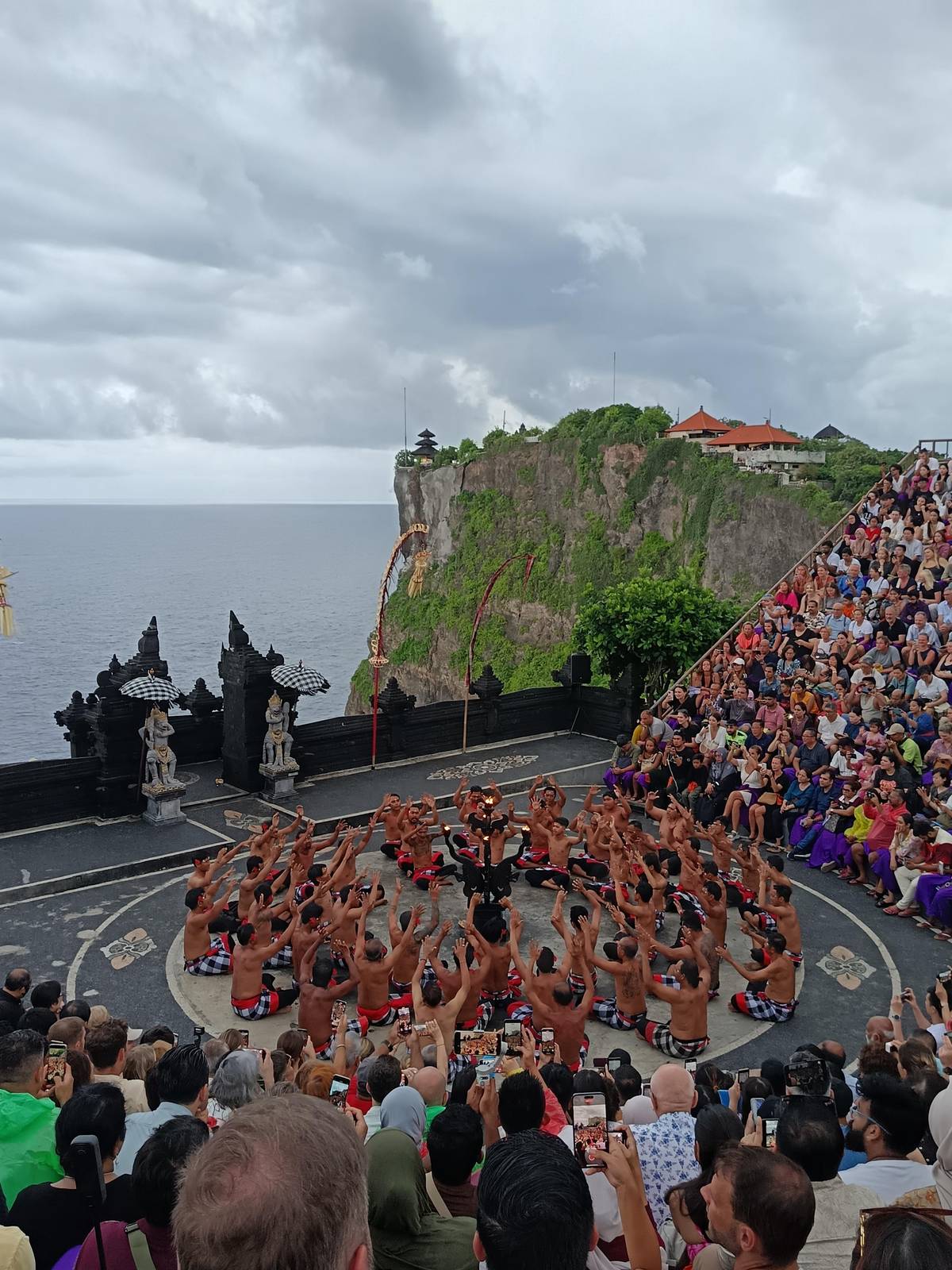
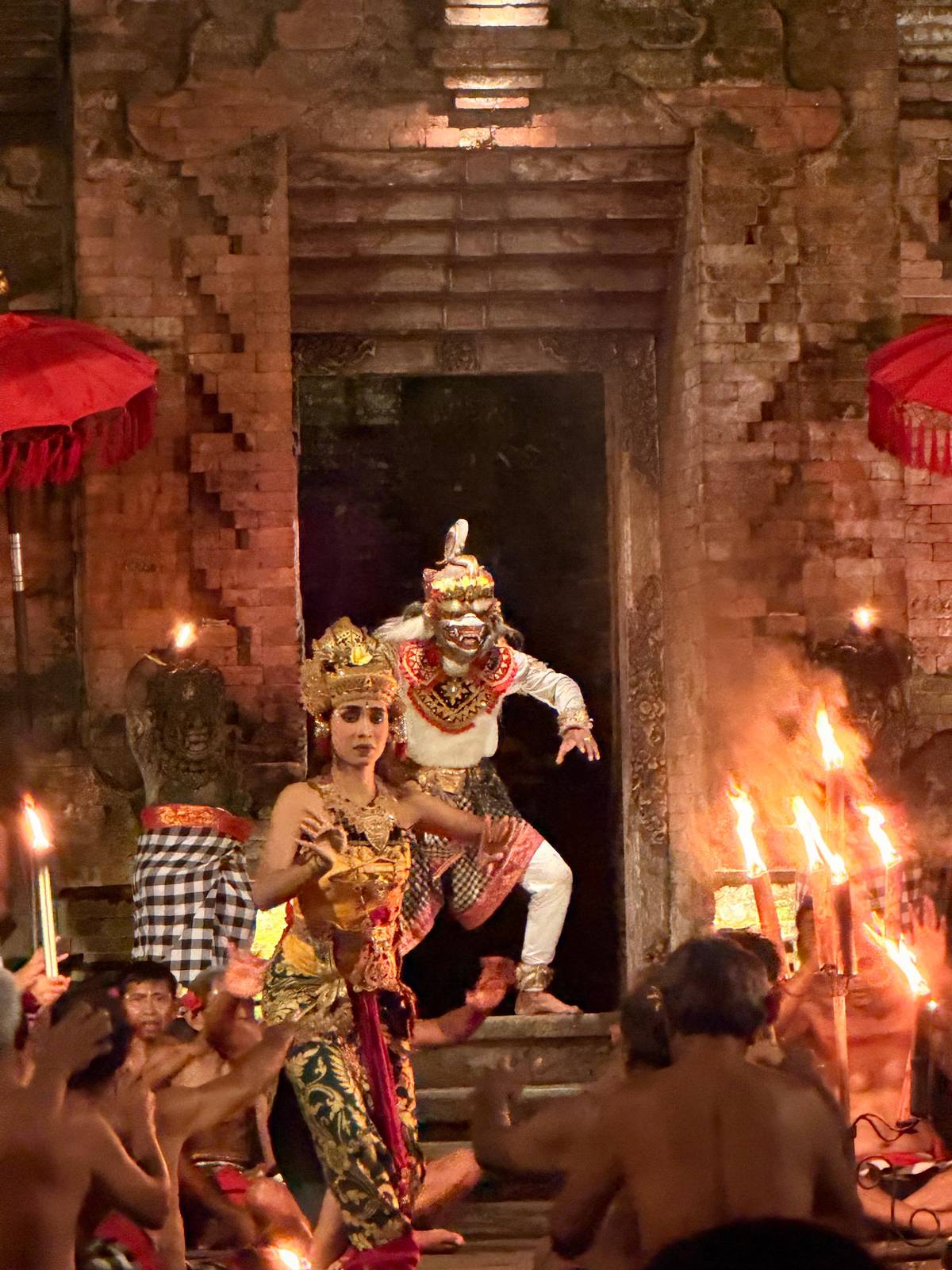
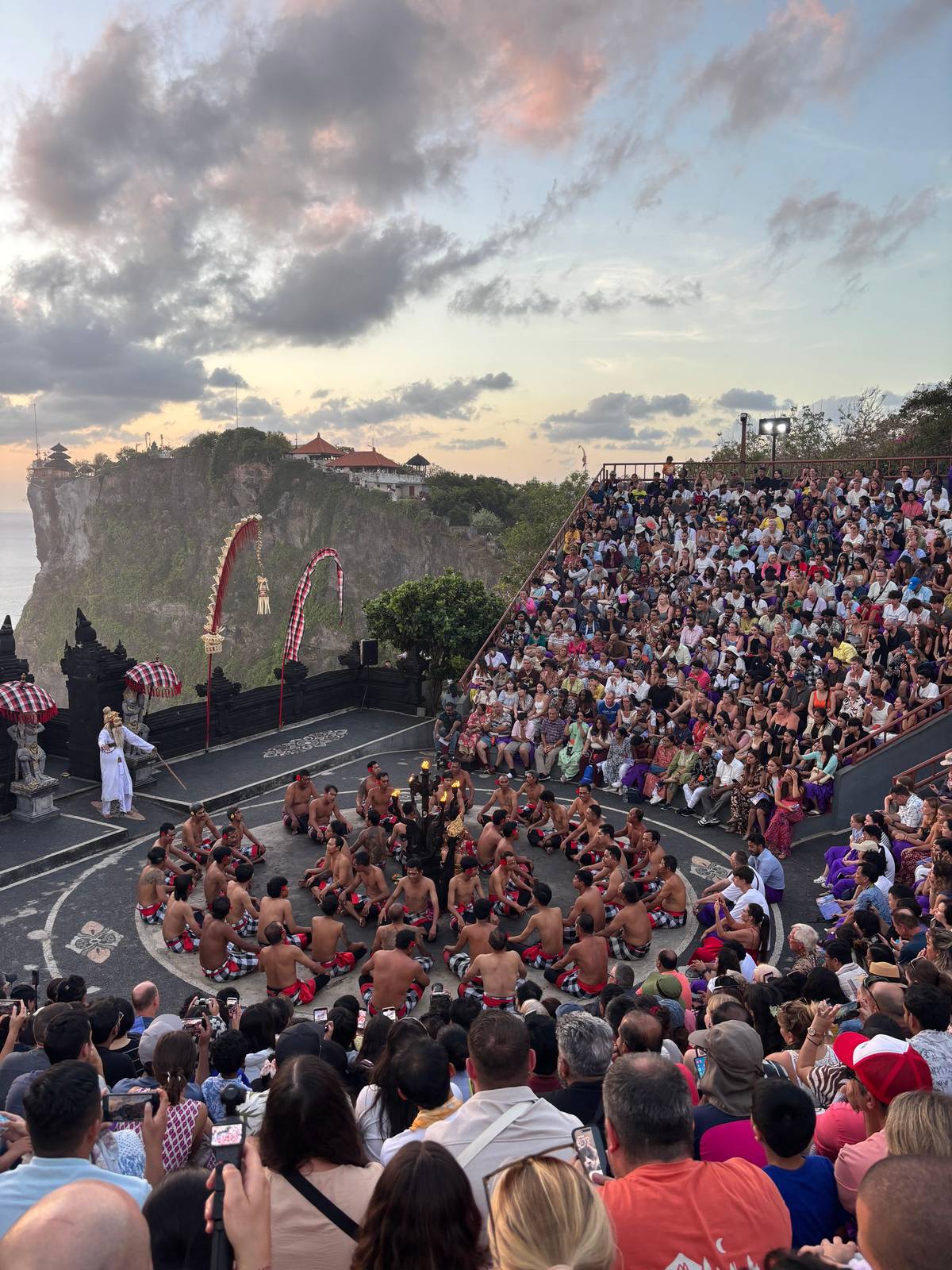
The kecak has no lion and no orchestra. It relies entirely on the synchronized chanting of a large male chorus, the Uluwatu temple management says, and it tells a chapter of the Ramayana in which the white monkey Hanoman helps rescue Shinta from the demon king Rahwana.112 Where the Barong is a duel, the kecak is a story carried by voices.
A short history
From royal courts to the UNESCO list
-
17th or 18th century
Legong at court
Danced in the royal courts of Bali.4
-
1930s
Kecak takes shape
Wayan Limbak and Walter Spies build it from the Sanghyang.1314
-
2010
Nine dances inventoried
Added to Bali Province's intangible heritage inventory.15
-
2015
UNESCO inscription
The Three genres of traditional dance in Bali join the list.16
Kecak vs Legong: voices against the gamelan
Comparing kecak vs Legong is comparing two ideas of music. Legong is danced to the gamelan, the Ministry of Tourism says, with the orchestra's melodies and beats guiding the dancers.5 Its very name joins leg, graceful movement, and gong, the gamelan that accompanies it.17 The kecak strips all of that away and leaves only the human voice.
Legong is also far older. The Ministry dates its origins to the 17th or 18th century, in the royal courts of Bali, and its best-known variant, Legong Kraton, is the Legong of the Palace.418 The kecak, by contrast, was developed in the 1930s by Wayan Limbak and Walter Spies.13
The performers differ too. Legong was traditionally danced by young girls before puberty, and it is a dance of fine detail: the seledet technique sends the dancers' eyes darting from side to side in rhythm with the music.1920 The kecak puts dozens of men in a circle and makes the crowd the instrument. Watching both a few nights apart is the clearest lesson in Balinese performance you can get in a week.
Three dances
Kecak, Barong and Legong compared
| At a glance | Kecak | Barong | Legong |
|---|---|---|---|
| Music | Voices only | Gamelan | Gamelan |
| Performers | A male chorus | Two inside the lion | Traditionally young girls |
| Story | Ramayana | Barong & Rangda | Court tales |
| Origin | 1930s | Not dated here | 17th or 18th century |
| UNESCO list | No | Barong Ket | Legong Keraton |
| Typical time | 18:00, Uluwatu | 9:30, Ubud | 7:30 PM, Ubud Palace |
Sources: Uluwatu's managing body, Indonesia's tourism ministry, ANTARA and the ticket listings.19191231813467
Three tickets
One evening for each dance
At sunset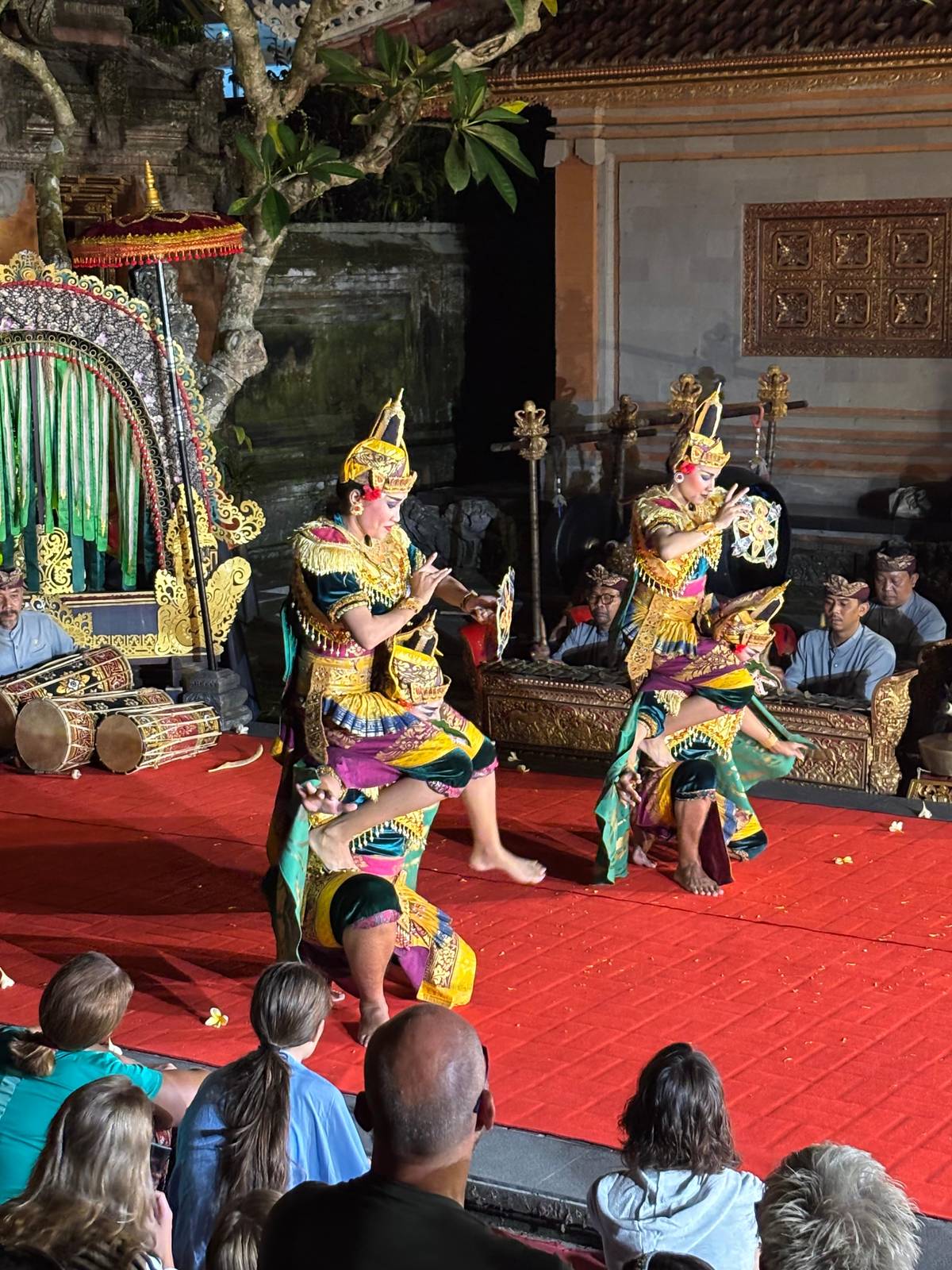 UNESCO-listed form
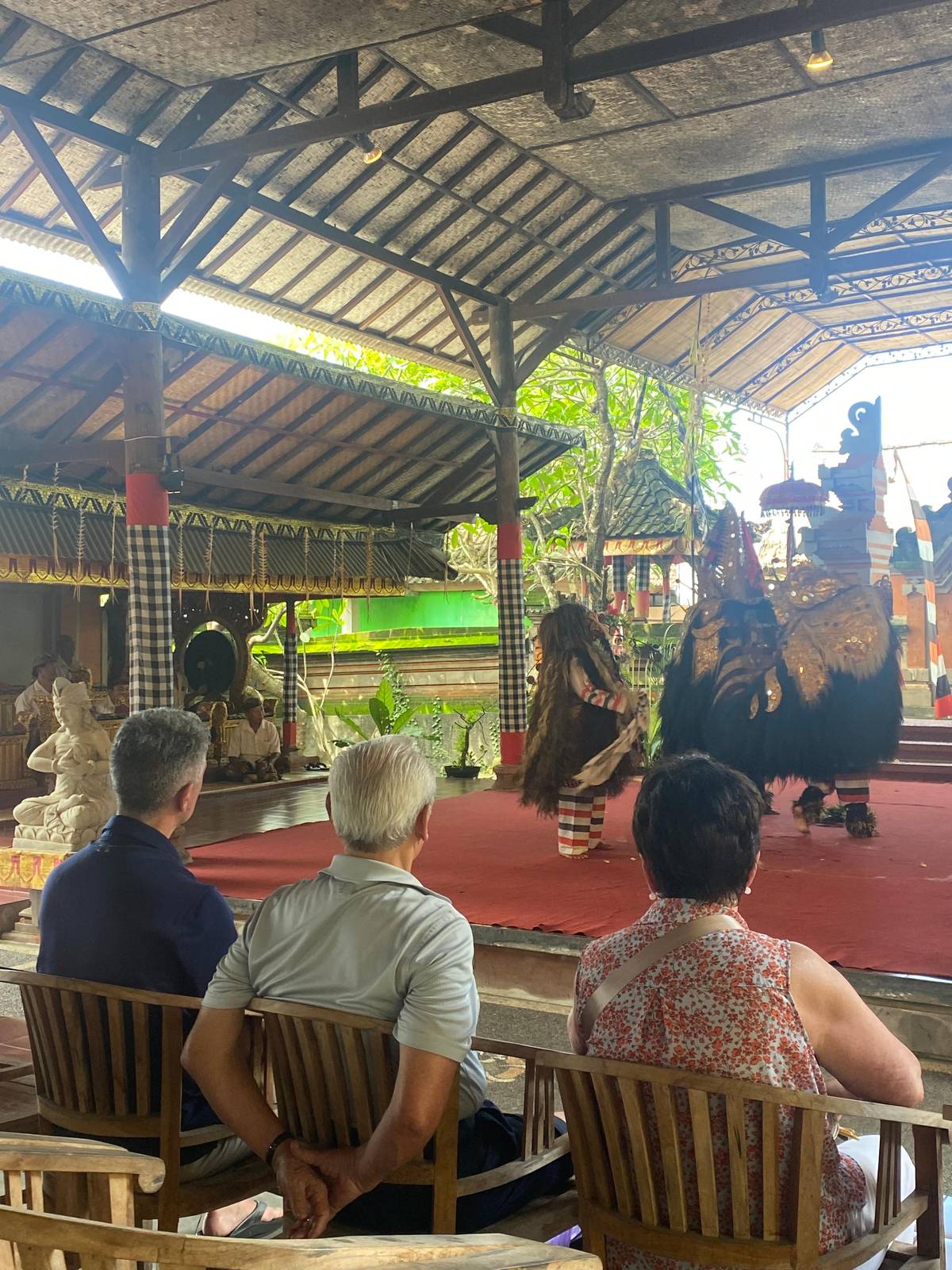 Morning show
Encourages the State Party to continue addressing possible threats emanating from the promotion of Balinese dance festivities for tourists
What UNESCO lists, and what it does not
UNESCO inscribed the Three genres of traditional dance in Bali on its Representative List in 2015.16 The genres are sacred, semi-sacred and dances for the enjoyment of the community at large, and in UNESCO's description all of them are accompanied by the music of the gamelan.2324
The Ministry of Tourism names the examples. Sacred dances such as Rejang, Sanghyang Dedari and Baris Upacara are performed only for temple ceremonies; semi-sacred ones include Topeng Sidhakarya, Gambuh and Wayang Wong; and the entertainment genre includes Legong Kraton, Joged Bumbung and Barong Ket Kuntisraya.252627
The nine inscribed dances are Barong Ket, Joged Bumbung, Legong Keraton, Wayang Wong, Gambuh, Topeng Sidhakarya, Baris Upacara, Sanghyang Dedari and Rejang.6 Kecak is not on that list. A Barong or Legong evening shows you a UNESCO-recognised form; the kecak shows you something younger, built for the stage. That is not a judgement on quality, only on age and purpose: kecak was shaped for an audience from the start.28
Checklist
For a dance evening on Bali
01
Tickets
- The Legong ticket is non-refundable
- Children pay the adult rate at the Legong
- Barong shows can start in the morning
02
Manners
- No flash during any performance
- Modest clothes in temple courtyards
- Stay seated until the end
Cost calculator
Three dances for your group
Starting totals for each show ticket.
People
Total from$18
per participant from $9
Check availabilityTotals: the cheapest listed fare times your headcount, turned into your currency with the ECB's daily figure; the booking page settles the real sum.
Video
Legong and Barong at the Ubud Palace
Nothing loads until you tap play.
Where to see each one
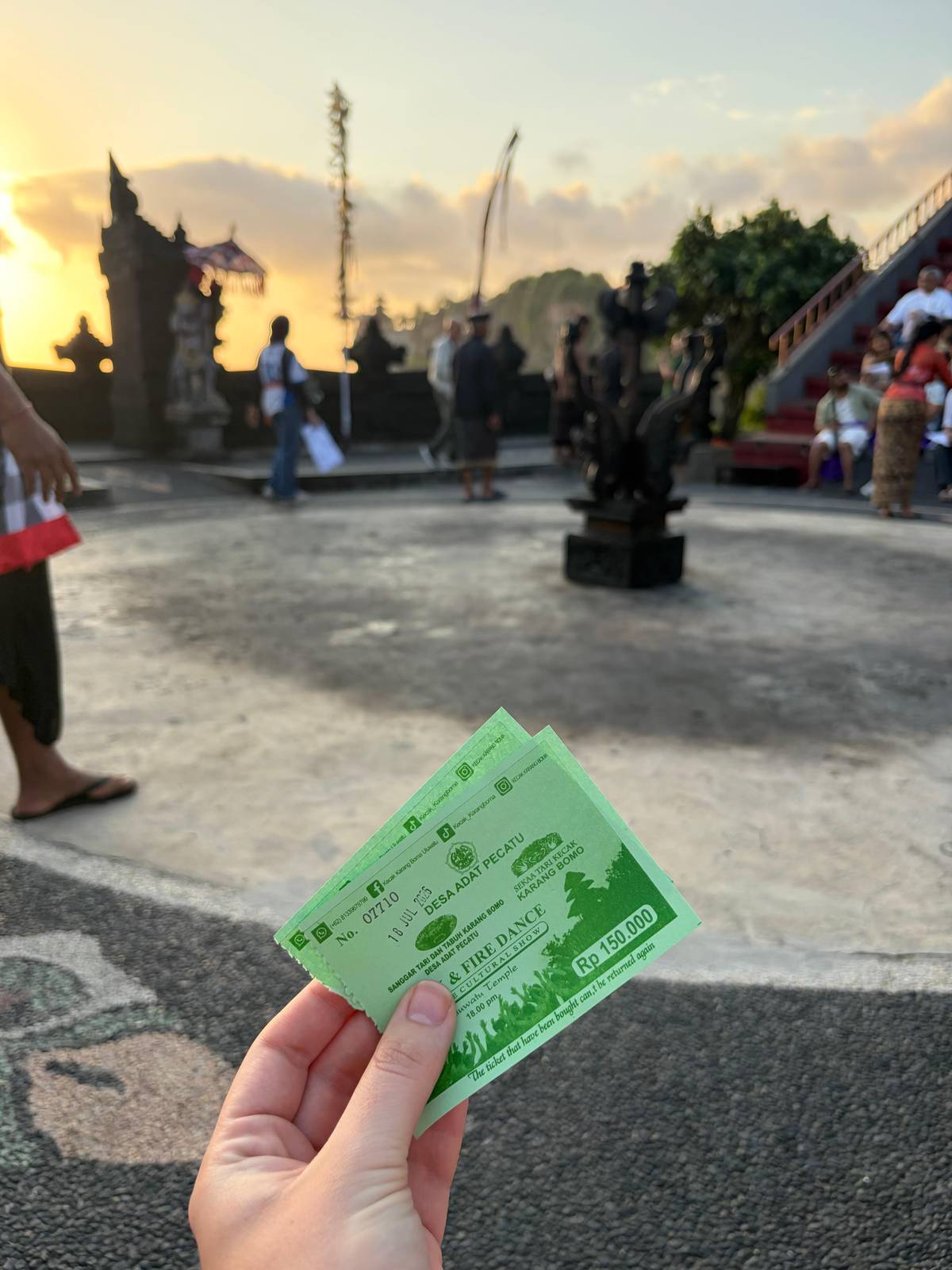
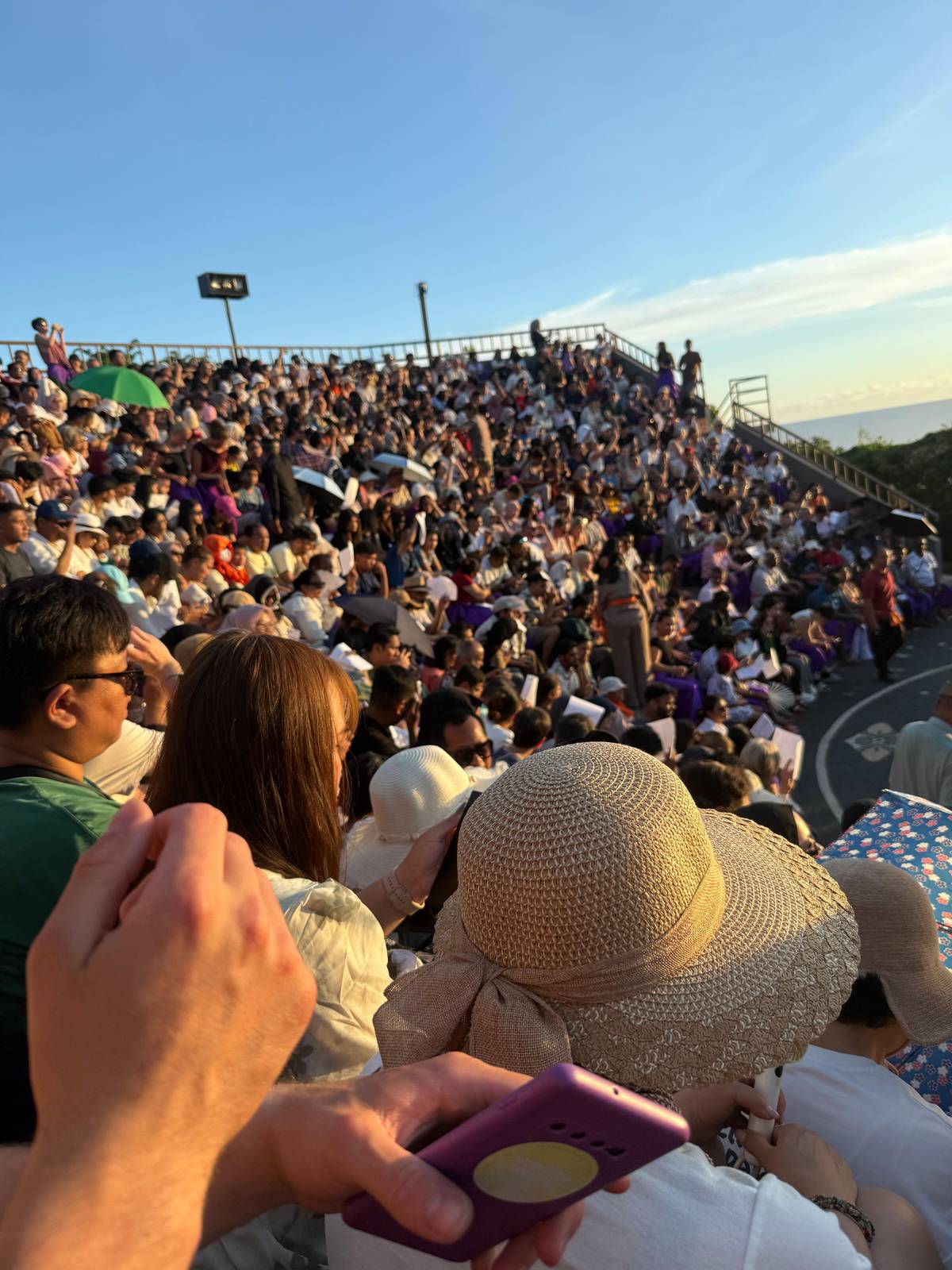
The kecak at Uluwatu runs every day from 18:00 to 19:00 on the cliff, and the entry ticket sold on this site starts from $9.7 In Ubud, several village and palace stages hold kecak nights through the week. In busy months book it before the other shows: the management warns that tickets can sell out quickly in peak seasons.29
For Legong, the Ministry of Tourism singles out the nightly performances at the Ubud Palace.30 The ticket this page books is for that show: starting every evening at 7:30 PM and lasting roughly 90 minutes, from $6, with 4,421 reviews. Children and adults pay the same rate, and the ticket is non-refundable, so book it once your evening is fixed.
Barong can be a daytime show. One Barong and Keris ticket starts at 9:30 at Pura Dalem Ubud or at the Seraya Budaya stage in Batubulan, from $6. The Ministry names Batubulan in Gianyar and Kesiman in Denpasar for the best-known Barong performances, and the GWK park lists a Barong and Bojog dance every day at 3pm.3132
All three in one stay
The timings make it possible to see all three without rushing. A Barong show in the morning, such as the 9:30 performance in Ubud or Batubulan, leaves the day free; a kecak at Uluwatu fills the late afternoon and evening; and the Legong at the Ubud Palace starts at 7:30 PM on another night.7
If you only have time for two, choose by contrast. The kecak and the Legong are the furthest apart: one has no instruments and a story told by a chorus of men, the other a full gamelan and the eye work of the seledet.120 The Barong sits between them, with gamelan, masks and a clear battle anyone can follow.
With younger children, the Barong may be the easiest start: it is short on subtlety and long on spectacle, with a lion, a demon and a fight. The Legong rewards patience, and the kecak rewards anyone who has read the story first. A morning show also suits children who would not last until the end of an evening performance.
How to watch each one
Each dance asks for a different kind of attention. At the kecak, watch the circle as a whole: the chorus sits cross-legged, raising hands and shaking bodies to the rhythm, and its movement is as much a part of the show as the costumed figures in the middle.33 Follow the soloist who leads the chant and narrates.34
At the Legong, look closer. The story lives in the hands and the eyes, in the fingers and in the darting seledet glance that moves with the music.20 Sit where you can see the dancers' faces rather than the whole stage, and let the gamelan lead you through the changes of mood.
At the Barong, follow the two great figures. The lion is played by two dancers inside one costume, and the scenes build towards the confrontation with Rangda and the kris dancers' trance.9310 The Ministry calls Barong Ket the most common type on Bali, so the lion you see is very likely that one.11
Trance, ritual and the stage
All three dances carry a ritual memory, even on a tourist stage. The kecak grew from the sacred Sanghyang, a dance performed to ward off negative spirits, the Uluwatu management says.14 In the Barong and kris drama the performers enter a trance when Barong appears.10 And Legong, the Ministry notes, is also performed in temple courtyards, with the gamelan.35
Some dances never leave the temple. The sacred wali dances are performed exclusively for religious ceremonies and temple rituals, and they are not meant as entertainment.25 What visitors see on a ticketed stage belongs to the forms that Bali shares with its guests.
UNESCO itself flagged the balance. In its decision it encouraged Indonesia to keep addressing possible threats from the promotion of Balinese dance festivities for tourists.22 As a member of the audience, the best response is simple: arrive on time, stay to the end, keep the flash off and treat the performers as artists, not props.
Your seat
The kecak on the cliff, on the evening you choose
One-hour show ticket, temple entry paid at the gate, free cancellation up to 2 days before.


You ask,we answer.
What is the difference between kecak and Barong?
Voices against masks. Kecak is a chanted Ramayana with no instruments; Barong is a lion spirit's battle with Rangda.123
Is the Legong accompanied by gamelan?
Yes. The gamelan's melodies and beats guide the Legong dancers, the Ministry says.5
Is kecak a UNESCO-listed dance?
No. The nine inscribed dances include Barong Ket and Legong Keraton, but not kecak.6
Where can I see the Legong?
At the Ubud Palace, nightly. The listing on this page gives daily at 7:30 PM, about 90 minutes, from $6.
When are Barong shows held?
Often in the morning. One Barong and Keris ticket starts at 9:30 at Pura Dalem Ubud or Batubulan.
How long is a Legong performance?
30 minutes to an hour. The Ministry gives that range; the Ubud Palace evening runs about 90 minutes.8
Sources
What this text is based on
- 1Uluwatu Temple (official site of the managing body)Uluwatu Kecak Dance↩
- 2Ministry of Tourism, Republic of Indonesia (indonesia.travel)The Barong and the Kris Dance: The Eternal Battle Between Good and Evil↩
- 3Ministry of Tourism, Republic of Indonesia (indonesia.travel)The Barong and the Kris Dance: The Eternal Battle Between Good and Evil↩
- 4Ministry of Tourism, Republic of Indonesia (indonesia.travel)Legong Dance↩
- 5Ministry of Tourism, Republic of Indonesia (indonesia.travel)Legong Dance↩
- 6ANTARA, Indonesia's national news agency9 Balinese dances become world cultural heritage↩
- 7Uluwatu Temple (official site of the managing body)Uluwatu Kecak Dance↩
- 8Ministry of Tourism, Republic of Indonesia (indonesia.travel)Legong Dance↩
- 9Ministry of Tourism, Republic of Indonesia (indonesia.travel)The Barong and the Kris Dance: The Eternal Battle Between Good and Evil↩
- 10Ministry of Tourism, Republic of Indonesia (indonesia.travel)The Barong and the Kris Dance: The Eternal Battle Between Good and Evil↩
- 11Ministry of Tourism, Republic of Indonesia (indonesia.travel)The Barong and the Kris Dance: The Eternal Battle Between Good and Evil↩
- 12Uluwatu Temple (official site of the managing body)Uluwatu Kecak Dance↩
- 13Uluwatu Temple (official site of the managing body)Uluwatu Kecak Dance↩
- 14Uluwatu Temple (official site of the managing body)Uluwatu Kecak Dance↩
- 15UNESCO Intangible Cultural HeritageDecision of the Intergovernmental Committee: 10.COM 10.b.18↩
- 16UNESCO Intangible Cultural HeritageThree genres of traditional dance in Bali↩
- 17Ministry of Tourism, Republic of Indonesia (indonesia.travel)Legong Dance↩
- 18Ministry of Tourism, Republic of Indonesia (indonesia.travel)Legong Dance↩
- 19Ministry of Tourism, Republic of Indonesia (indonesia.travel)Legong Dance↩
- 20Ministry of Tourism, Republic of Indonesia (indonesia.travel)Legong Dance↩
- 21Uluwatu Temple (official site of the managing body)Uluwatu Kecak Dance↩
- 22UNESCO Intangible Cultural HeritageDecision of the Intergovernmental Committee: 10.COM 10.b.18↩
- 23UNESCO Intangible Cultural HeritageThree genres of traditional dance in Bali↩
- 24UNESCO Intangible Cultural HeritageThree genres of traditional dance in Bali↩
- 25Ministry of Tourism, Republic of Indonesia (indonesia.travel)Three genres of traditional dance in Bali↩
- 26Ministry of Tourism, Republic of Indonesia (indonesia.travel)Three genres of traditional dance in Bali↩
- 27Ministry of Tourism, Republic of Indonesia (indonesia.travel)Three genres of traditional dance in Bali↩
- 28Ministry of Tourism, Republic of Indonesia (indonesia.travel)Kecak Dance: the Meaning and Its Philosophical Movements↩
- 29Uluwatu Temple (official site of the managing body)Uluwatu Kecak Dance↩
- 30Ministry of Tourism, Republic of Indonesia (indonesia.travel)Legong Dance↩
- 31Ministry of Tourism, Republic of Indonesia (indonesia.travel)The Barong and the Kris Dance: The Eternal Battle Between Good and Evil↩
- 32Garuda Wisnu Kencana Cultural Park (official site)Daily Cultural Performances↩
- 33Ministry of Tourism, Republic of Indonesia (indonesia.travel)Kecak Dance: the Meaning and Its Philosophical Movements↩
- 34Ministry of Tourism, Republic of Indonesia (indonesia.travel)Ubud's Kecak Dance: Enchanting Tradition↩
- 35Ministry of Tourism, Republic of Indonesia (indonesia.travel)Legong Dance↩
Keep reading